


(Photo Credit: Depositphotos.com)
First things first: New York City is not dead. It’s not dying. It’s not on life support. It is not a “hellscape,” despite what Tucker Carlson, a few hedge fund refugees in Miami, and your aunt from Westchester think. The city’s problem isn’t moral decay or immigration or even the rat czar’s apparent ineffectiveness at czaring the rats. Its biggest problem is that no one truly runs this place. Or rather, the people who do run it don’t actually live here, and they certainly don’t ride the subway.
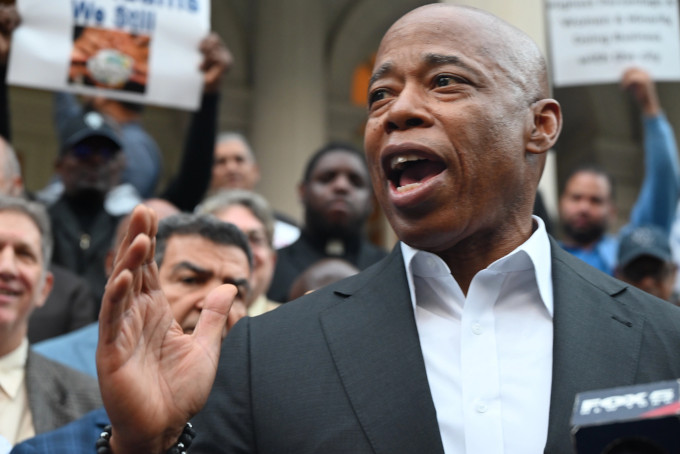
Every few years as a civic ritual, New Yorkers line up at their neighborhood polling sites and vote for a new mayor. We bicker in bodegas and Equinox gyms about who’s too tough on crime, who’s too soft on billionaires, and whether Eric Adams knows what a spreadsheet is. And yes, the mayor has real power. The lights on your block, the cops on your corner, whether your child’s school has working A/C and enough social workers. These are municipal decisions. The mayor can set the tone for law enforcement policy, can direct city agencies to prioritize certain initiatives, and proposes a budget that, in theory, reflects his administration’s values. If you suddenly notice more trash on the streets, fewer school safety officers, or an uptick in housing inspections, that’s likely City Hall pulling a lever somewhere. The mayor also controls appointments to dozens of boards and commissions, which means the mayor can shape how things like land use, public health, and economic development are handled. Certainly, the daily quality of life for most New Yorkers does hinge on these hyperlocal levers.
But when it comes to the policies that define a city’s future—how affordable our housing is, how much we pay in taxes, whether the MTA will function before the heat death of the universe—that authority rests not in City Hall, but in Albany, where priorities are shaped not by subway riders or rent-burdened families, but by suburban voters and legislative logjams. New York’s mayors are powerful in the way cruise ship captains are powerful: You steer what you can, smile for the camera, and pray the iceberg is someone else’s jurisdiction.
With the Democratic mayoral primary just weeks away (a ritual that, in this one-party town, is less an election than it is, practically, a coronation) it’s worth pausing to ask: What exactly are we voting for? Because while we’re laser-focused on the who—the slogans, the subway photo-ops, the requisite outer-borough diner visits—we rarely ask what, structurally, that person will even be able to do. And the answer, inconvenient as it may be for democracy or delusion, is: not a whole lot. Not when Albany holds the purse strings, the policy levers, and just enough passive-aggressive disdain for the five boroughs to treat our city budget like a punishment.
(Photo Credit: Depositphotos.com)
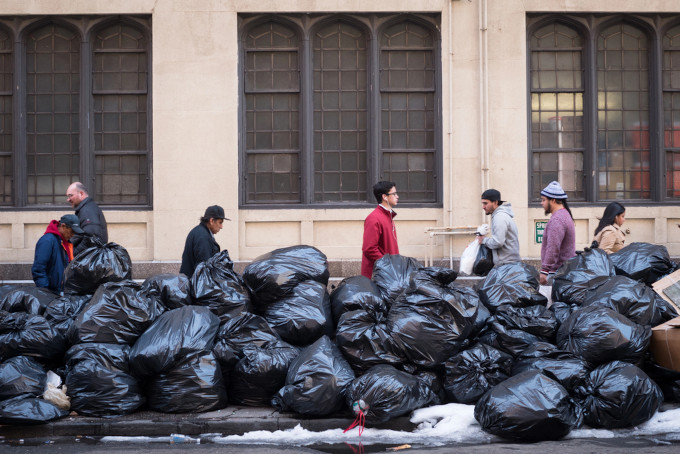
So here we are again, squinting toward the ballot box and hoping for a different outcome. Only this time, the guy currently in office was just under federal investigation. Not that it seems to matter. Eric Adams, our self-appointed “swagger” mayor, entered City Hall promising public safety, managerial competence, and vibes. What we got instead was a spectacle: press conferences about veganism, cryptic Instagram posts, and a fundraising scandal that landed him on the wrong end of an FBI search warrant. Federal agents seized his phones. His campaign’s ties to foreign influence and eyebrow-raising donations from Turkish nationals raised serious criminal questions. His approval ratings have cratered like a Midtown pothole. His political allies are bailing, and his detractors have been vindicated with every subpoena.
And yet, even if Adams were the platonic ideal of municipal leadership (he is not), his hands would still be tied. Because despite what the mayor’s title suggests, this is not a city governed by its mayor. It’s a city governed by a tangle of authorities, agencies, and upstate lawmakers with a deep skepticism for anything south of Yonkers. Adams may be many things (some of them unprintable), but even the most visionary mayor would find themselves boxed in by a system that’s structurally rigged to keep New York begging for permission.
When a mayor is focused and politically shrewd, the tools at his disposal can be used to real effect. Michael Bloomberg used them to launch PlaNYC and rewrite the city’s entire zoning map; Bill de Blasio wielded them to implement universal pre-K and expand paid sick leave. Adams, at his best, has used them to speed up building inspections and push for asylum-seeker resettlement logistics. But even these relatively modest successes require cooperation from a fractious City Council, buy-in from state agencies, and the ability to navigate a Kafkaesque thicket of interagency turf wars, public unions, watchdog groups, and NIMBY lawsuits. In other words, the mayor can try, but try too hard or too boldly, and Albany reminds him who’s really boss.
Rigged as this broader context is—when the housing crisis can’t be tackled at the root, or when transit falls apart and the city can’t fix it—it creates a feedback loop where voters expect magic and get subway signal problems. And then we wonder why every mayor winds up despised by year two.
And so, we’re stuck in a strange paradox: New Yorkers are rightly furious about the state of the city, and yet largely powerless to change it at the ballot box. We can swap one mayor for another (and we probably will) but the mayor can’t cap your rent, greenlight new housing, overhaul the MTA, or raise taxes on Wall Street. Those decisions are made by people whose idea of mass transit is a parking lot at the Metro-North.
(Photo Credit: Depositphotos.com)
Because here’s the part of the magic trick nobody claps for, mostly because we don’t even realize it’s a trick in the first place: The real decisions, the ones that determine whether New York City thrives or limps along on duct tape and resentment, aren’t made in New York City at all. They’re made in Albany, by a legislature that doesn’t take the subway, doesn’t pay five grand a month for a one-bedroom apartment, and doesn’t think twice about using the city’s tax base as a piggybank. This is the quiet dysfunction most voters never see. New York City may be the cultural, economic, and population center of the state, but in the eyes of Albany, it’s just one municipality among hundreds. And a particularly annoying one, at that.
Start with housing, the issue that, if you listen to literally any New Yorker for more than six seconds, defines our daily experience. The mayor can propose rezonings, fund affordable units, and push for new construction on city-owned land. But the real rules are written upstate. Tenant protections like “good cause eviction,” despite wide support in the city, stalled for years, and a court ruled that cities had no jurisdiction to pass the law (yes, really). Tax incentives for affordable housing, like the now-expired 421-a program, require state approval to function. NYCHA, the city’s mammoth and crumbling public housing authority, relies on state and federal funds for even the most basic repairs. And yet when the money is doled out, it’s done so grudgingly, like handing lunch money to a sibling you hate.
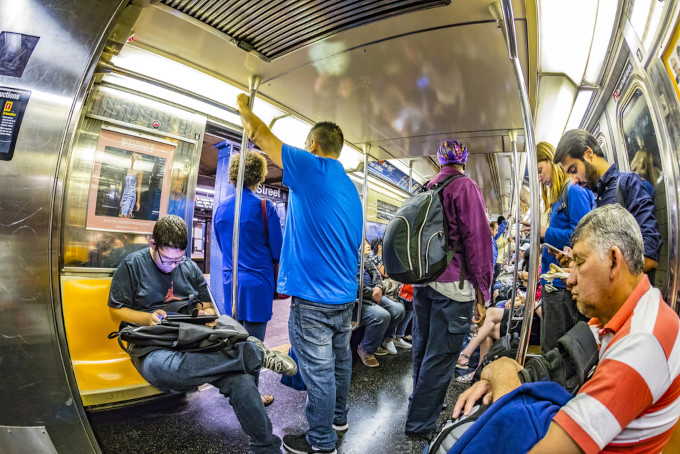
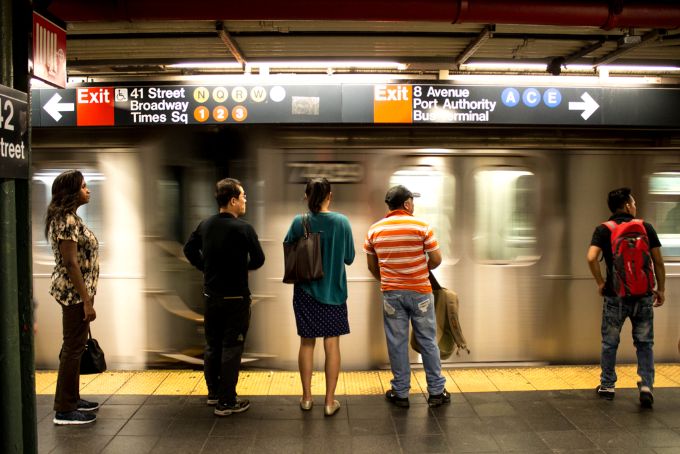
And of course, transit. The MTA is technically a state agency, overseen by a board with enough political appointees to qualify as its own minor constitutional monarchy. The city contributes billions to the MTA’s operating and capital budgets but has little say over how it’s run. So, when our train doesn’t come for 18 minutes, and the platform smells like a melted battery, we can thank the delicate ballet of state control, bureaucratic inertia, and budgetary sabotage. Even congestion pricing—long planned, widely supported, and desperately needed—was slow-walked by the very state officials who were supposed to champion it. This isn’t accidental. It’s engineered gridlock, and New Yorkers are footing the bill.
Speaking of bills: taxes. The city can’t raise its income tax without state permission. It can’t implement its own wealth tax, or high-earner surcharge, or carbon tax, or luxury pied-à-terre levy, or really anything else that would make billionaires mildly uncomfortable. The city can’t even toll its own bridges without legislative approval. Albany has kept a tight grip on the city’s fiscal autonomy not because it makes sense but because it can.
And so, predictably, things fall apart.
(Photo Credit: Depositphotos.com)
Not in the cinematic, explosion-filled way that might at least be entertaining; but in the slow, grinding, death-by-committee way that New Yorkers have learned to mistake for normal. The mayor announces an ambitious plan, the press conference gets decent coverage, a few pilot programs are launched, and then… Albany ghosts. No funding. No legislation. No authority. Congestion pricing? Delayed over and over. Mental health response reforms, commercial rent protections, renewable energy buildouts—all casualties of a system where the state holds the power, but none of the urgency.
It’s like trying to build a house while someone else controls your toolbox, your budget, and your permission to use either. You can knock on the door and ask nicely. Maybe they’ll give you a wrench if they’re in the mood. But the second you look like you’re building something too progressive, too urban, too unlike Syracuse, they’ll just change the locks.
The deeper consequence of this power imbalance isn’t just stalled policy, but eroded faith. Voters show up to elect a mayor who promises change, only to watch that change evaporate somewhere on the Amtrak to Albany. And with each cycle, cynicism hardens. The idea that government is ineffectual becomes self-fulfilling. Why vote, when nothing ever happens? Why believe in local politics, when the actual locus of power lies 150 miles away behind a closed-door committee meeting? What we’re left with is a kind of municipal kabuki theater. The mayor plays the part, the press reports on the performance, and the audience at home shakes their head and wonders why the rent’s still too high. Meanwhile, the real script is being written offstage, by people you probably didn’t vote for and who have little incentive to care how that script ends for New York City.
Of course, none of this happens in a vacuum. Albany’s inertia isn’t just fueled by disdain; it’s fueled by math. And in a state where most legislative districts are not in New York City, lawmakers’ political survival depends less on what’s happening in Brownsville or Mott Haven and more on how things land in Buffalo, Babylon, and Ballston Spa. For many upstate and suburban legislators, siding with New York City, even when it makes policy sense, is a political liability. And so, they don’t.
Because the truth of democratic politics is that elected officials, for better or worse, tend to do the things that will get them reelected and not necessarily what’s best for the people they represent. And in many districts, especially the swingy or deep-red ones outside the five boroughs (sans Staten Island), that means opposing anything that smells like a New York City idea. Tenant protections? That’s “socialism.” More tax authority for the city? “Class warfare.” Congestion pricing? “Punishing commuters.” (Plans for congestion pricing were first introduced as far back as 2007, but Albany democrats quelched them, refusing to even bring the proposal to a vote). It doesn’t matter if the city generates the lion’s share of the state’s revenue, or that its success is functionally tied to the state’s fiscal health. Politically, dunking on New York City plays better than helping it.
(Photo Credit: Depositphotos.com)
This isn’t just frustrating, it’s structurally baked in. The State Senate and Assembly were designed to balance geographic representation, not population. That means rural and suburban areas wield disproportionate influence over statewide policy, even when those policies primarily affect citydwellers. It also means that lawmakers whose constituents view New York City as a lawless liberal experiment are the ones deciding whether the city can legalize basement apartments or raise taxes on people making $5 million a year.
The result is a kind of legislative gaslighting. When New York City asks for the tools to manage its own problems (tools that other global cities routinely control), it’s painted as overreaching, radical, irresponsible. As if the city that keeps the state solvent shouldn’t also have the right to decide how to house its people or fund its own transit. The narrative is both condescending and backwards: Albany depends on New York City, but it governs like it’s trying to keep the city in detention.
And it’s not just us. Across the country, big cities are increasingly finding themselves trapped in similar straitjackets—economic engines beholden to statehouses that resent their influence but depend on their output. In Florida, state lawmakers are trying more and more to override ordinances passed in Miami and Orlando. Texas has gone so far as to pass “super-preemption” laws that prohibit cities like Houston or Austin from enforcing local labor protections, tenant rights, or even water breaks for construction workers (affectionally known as the “Death Star” bill in The Lone Star State). In Missouri, the city of St. Louis technically exists as its own quasi-county, but still struggles to exert meaningful control over crime prevention, budgeting, and education, thanks to convoluted state-level oversight and decades of anti-city backlash.
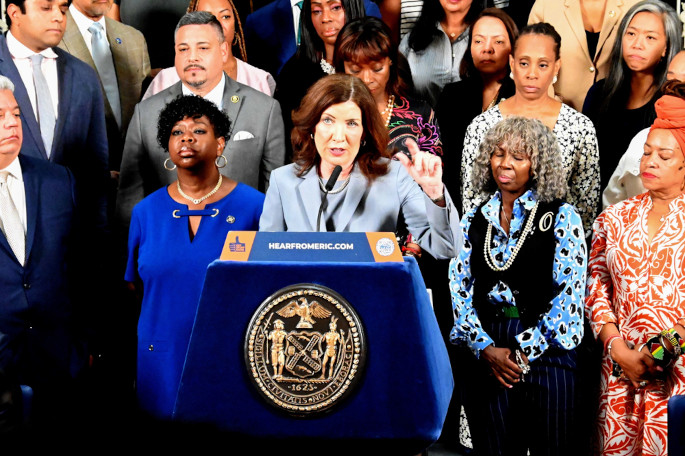
But what makes New York’s setup especially galling is the sheer scale of its imbalance. Th e city doesn’t just account for a large chunk of the state’s population. It’s home to more than 40 percent of New Yorkers; generates over half the state’s tax revenue; and is a global capital of finance, media, and culture. And yet, it has about as much autonomy as a school district in Yonkers.
Compare this to other global metropolises. London, for instance, has an elected mayor with real authority over transportation, housing, and policing -- bolstered by a citywide assembly that holds that mayor accountable. Paris, though constrained by national politics, has long maintained localized power over zoning, mobility, and environmental policy. Tokyo, while technically nestled inside a broader prefectural system, enjoys budgetary and administrative independence that lets it govern as the megacity it is (as detailed in this delightful official guide).
(Photo Credit: Depositphotos.com)
Even some U.S. cities have carved out more autonomy. Washington, D.C.—hardly a model of federal respect—has its own council and budgetary powers that, while subject to congressional review, are more expansive than New York City’ fiscal leash under Albany. Chicago and Los Angeles, while still fighting their own battles with state preemption, have more direct control over school boards, police departments, and local tax structures than New York’s famously balkanized setup allows.
To be fair, this structure can make sense for smaller municipalities. If you’re governing a town of 40,000 where zoning issues rarely transcend neighborhood lines, or where pooling tax revenue statewide is the only way to afford basic services, centralized oversight has logic to it. The state helps coordinate, balances priorities, and prevents local corruption. But applying that same model to an 8.5-million-person metropolis that operates as a de facto state unto itself? It’s like trying to run a nuclear reactor with an extension cord.
The point isn’t that New York City should be its own state (although good luck finding a Manhattanite who wouldn’t at least flirt with the idea). It’s that the largest, most complex urban system in the country shouldn’t be forced to ask for permission every time it wants to act like the city it is. And yet, even knowing all this, even with the comparisons, the data, the frustrations on the ground, change remains elusive. Because structural reform, unlike scandal or celebrity, doesn’t trend. And the kind of changes New York City needs aren’t the sexy, tweetable kind. They’re slow. Legal. Bureaucratic. And deeply threatening to the very people who currently benefit from the status quo.
There have been pushes for “home rule”—the principle that local governments should be able to legislate on issues that directly affect them—since practically the founding of the city in its modern iteration. But despite its presence in the New York State constitution, it remains mostly symbolic. Albany can override local control with a simple majority vote. Reforms to change that would require amending the constitution or dramatically rebalancing political incentives. And who would have to approve those changes? The very legislators who currently enjoy being able to micromanage a city they don’t live in.
There may be other pathways. Charter revisions can give the city more teeth in areas like land use or fiscal management. Lawsuits can challenge specific instances of state overreach. Coalitions of big-city mayors across the state could theoretically form a united front; though in practice, they’d likely be siloed and under-resourced. Some New York City lawmakers in Albany have called for carving out specific exemptions that would let the city pass certain kinds of legislation on its own, like housing or tax policy. But every one of these efforts runs into the same brick wall: entrenched power, allergic to disruption and armed with a procedural playbook that hasn’t been meaningfully updated since the 1970s.
(Photo Credit: Depositphotos.com)
Any mayor, then, who campaigned on reforming this system would, by definition, have very little power to do so once elected. The job doesn’t come with a crowbar. You can yell. You can beg. You can charm. But fundamentally, you are asking Albany to give up power, and Albany doesn’t do that.
Like congestion pricing, a policy that, in theory, should have been a slam dunk. A proven strategy used in cities like London, Stockholm, and Singapore to reduce traffic, cut emissions, and fund transit infrastructure. New York’s version was poised to be the first of its kind in the U.S., charging drivers entering Manhattan’s central business district and generating over a billion dollars annually for the perpetually cash-starved MTA. The city wanted it. The MTA needed it. Even the business community begrudgingly accepted it. It passed the state legislature in 2019. It was supposed to launch in 2021.
It finally went live in 2025. And it’s already doing really, really well (to the surprise of no one).
The delays were endless, opaque, and infuriating, dragged down by federal environmental reviews, internal bickering, and above all, a distinct lack of urgency from Albany. Governor Hochul, after years of publicly supporting the plan, even wavered under political pressure from suburban lawmakers terrified of angering their car-commuting base and halted the policy. The very same state officials who approved the plan were doing their best impression of bureaucratic amnesia, mumbling about “logistical issues” while the city choked on gridlock and the MTA stared down yet another budget shortfall.
And the mayor? He can’t do much besides publicly cheerlead. The city doesn’t control the tolling authority. It doesn’t set the price. It doesn’t get to enforce it. New York City can pass all the climate resolutions it wants, but if Albany decides that drivers from Westchester shouldn’t have to pay to clog up SoHo, then the whole policy dies on the vine. And in the meantime, subway stations flood, bus lanes go unpoliced, and the city’s green ambitions are reduced to a stack of unimplemented PDFs.

(Photo Credit: Depositphotos.com)
Congestion pricing wasn’t just an almost-missed opportunity; it’s a case study in structural impotence. It shows how even when the stars align politically, even when there’s urgency and vision and a desperate need, the city’s fate still hangs on the whims of people who answer to a different electorate entirely. That’s not just bad policy, it’s civic sabotage.
So where does that leave us?
It leaves us with a city that has the population of a small country, the GDP of a G7 economy, and the governance structure of a teenager who has to ask their stepdad for gas money. A city that can collect the trash, but not decide how many affordable apartments get built. That can police its people, but can’t tax its own millionaires without outside approval. That’s expected to be a global capital, but treated like an unruly tenant by the state it sustains. A city that cannot deal with its rat scourge because the issue is a symptom of much bigger problems in sanitation, housing, and economic disparity that are bogged down by Albany bureaucracy.
And it begs the question: Do New Yorkers actually want their city to have real power?
(Photo Credit: Depositphotos.com)
Because if we do, we can’t keep sleepwalking through municipal elections. We can’t keep accepting the fiction that changing the mayor is enough. If every mayor enters office with the same one hand tied behind their back, it doesn’t matter who’s wearing the tailored suit and doing the ribbon-cuttings. Until we confront the structural imbalance and demand actual home rule, legislative authority, and budgetary autonomy—we’re just rearranging the chairs on a ship someone else is steering.
There is no one reform that solves this. No single charter revision, court ruling, or viral campaign that can pry power loose from Albany’s grip. But that doesn’t mean it’s impossible. It just means it’s political. And political power moves when people move it.
If New York City is going to be saved, it won’t be by finding a better mayor. It will be by demanding a better deal.
Can New York City be saved? Sure. But not by vibes, not by platitudes, and definitely not by pretending that a mayor—any mayor—can Houdini their way out of a system built to keep them in a box.
The real question isn’t whether this city can be governed. It’s whether we’re finally ready to stop treating power like a spectator sport and start demanding it back. Until then, we’ll keep yelling at City Hall while Albany holds the keys. And New York City, for all its brilliance, will keep running in place: loud, chaotic, ambitious as ever, but shackled to a system that never really wanted it to win.
Author Bio:
Angelo Franco-DeWitt is the chief features writer at Highbrow Magazine.
For Highbrow Magazine