


3 stars (out of 4)
Director: David Cronenberg (“The Fly,” “Scanners”)
Starring: Vincent Cassel, Diane Kruger, Guy Pearce and Sandrine Holt
Rated: R for strong sexual content, graphic nudity, language and some violent content
Available: In theaters
The Shrouds is dense, surreal and frequently confounding -- a statement meant as praise.
There is no question whether writer-director David Cronenberg has created a drama worthy of our time. Rather, the questions lie in his intended messaging and, more importantly, the meaning viewers take from the film. Like the work of David Lynch, Terry Gilliam, and other surrealists, The Shrouds leaves more queries than answers, and the film is clearly designed to make viewers ponder the issues that haunt their existence.
The focus is on Karsh (Vincent Cassel), a well-off businessman introduced when his dentist notes that “grief” is destroying his teeth. Karsh questions whether that is possible, but not the notion of his grieving. His wife’s slow decline from cancer left him in a state of despair that intensified upon her death.
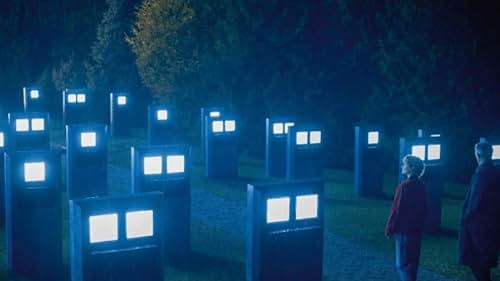
Karsh’s only comfort comes in the form of a morbid technology that he pioneered. Karsh holds the patent on high-tech burial shrouds that allow the living to view the slowly decaying bodies of their loved ones, even though they are deep in the ground. Karsh (and some customers) appreciate the continued intimacy this allows, while others find the technology both gruesome and ecologically damaging.
As the film progresses, Karsh is disturbed when he notices bony growths appearing on his wife’s skeleton. This leads him to wonder if his wife’s sister, who long believed doctors were experimenting on her sibling, was on to something. When a handful of graves are vandalized in one of Karsh’s high-tech, shroud-cam cemeteries, he crawls even further into a rabbit hole of conspiracy theories.

Although there is a mystery at the center of the story, The Shrouds is less about who destroyed the graves than Karsh’s ongoing obsession with his dead wife. Cronenberg famously wrote the screenplay after losing his spouse, who died in 2017. Although the film is not autobiographical, it is centered on ideas with which the writer-director grappled. That said, Cronenberg has long focused on fundamental human experiences, so The Shrouds may be particularly personal, but it feels at home within a substantial body of work that includes Scanners (1981), The Fly (1986), and A History of Violence (2005).
For viewers, much about The Shrouds is intentionally clouded, including the timeframe. The film is set in the future, made clear by the fact that a human being can recover from an amputation or broken bone within hours. Self-driving car technology has also advanced to the point of perfection, and AI assistants are fully animated, largely independent entities. In other words, the setting is familiar, but not the present.
Along with meditating on grief, the movie considers jealousy, rage, desire, and the danger of unfettered technical advancement. It’s a lot, and digesting it takes time.
Days after the initial viewing, I am still decoding moments, particularly the end, which is a confounding puzzle that is both provocative and maddening. In short, viewers can be expected to read Cronenberg’s feature in a variety of manners, and I suspect that’s as he hoped.
But is it a good film? It’s gutless but truthful to say, “I’m not sure.”
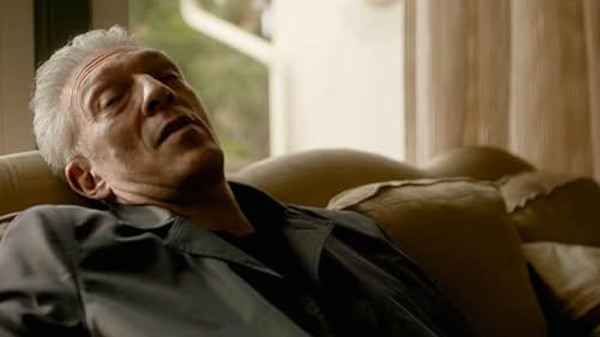
The Shrouds makes viewers work to find meaning, and there’s delight in movies of its kind. There is also, however, something frustrating about never knowing what should be viewed as real and what should be read as metaphorical or purely symbolic.
Cassell and co-star Diane Kruger (who plays Karsh’s wife, her sister, and the voice of his AI) are astonishing throughout. Guy Pearce and Sandrine Holt are also riveting. The cinematography is beautiful, and the tone of every scene is appropriately morose and mysterious. In short, the technical aspects of the picture are sublime.
Whether one enjoys the theatrical experience may well depend more on them than the work. Cronenberg has succeeded in producing a piece of art that challenges its audience and demands that they think about sometimes uncomfortable ideas. It’s an assignment that is both wonderful and disquieting, and those two adjectives perfectly assess the project as a whole.
Author Bio:
Forrest Hartman is the chief film critic for Highbrow Magazine.
For Highbrow Magazine