


Everything Must Go: The Stories We Tell About the End of the World
By Dorian Lynskey
Pantheon
500 pages
Ever since the dawn of man, it seems we’ve been predicting (or, at least, anticipating) the end of the world as we know it. This is a key theme in Everything Must Go: The Stories We Tell About the End of the World, author Dorian Lynskey’s new study of what he dubs “apocalyptic angst.”
In a span of nearly 400 pages (excluding notes and index), Lynskey catalogues the doomsday theme over hundreds of years, though mostly from the 19th century onwards. For example—to choose from one of innumerable samples—after a spate of biblically-inspired prophecies in the early 1800s, one London newspaper had had enough:
“‘A dozen times in a century,’ snapped The Times, ‘these miserable predictions are repeated, which, though always falsified, always find dupes; and this will be the same for some thousand years to come, because there will always be prophets and fools.’”
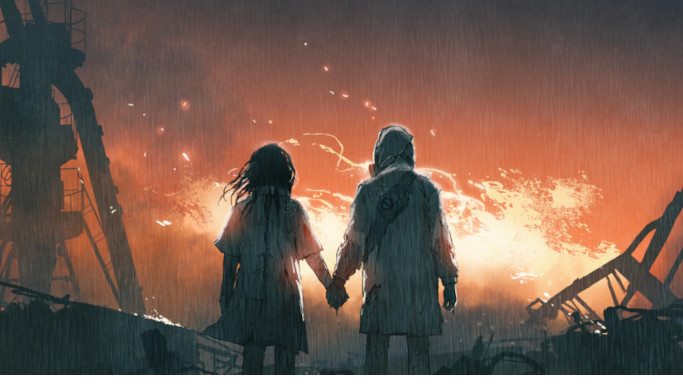
Lynskey focuses on films, novels, plays, videogames, and other art forms centered around the collapse of society and/or destruction of the planet—the result, he says, of his personal “two-year binge of end-of-the-world stories.” As he notes, stories of a world in ruins have become a thriving, commonplace form of entertainment:
“What is notable now is that apocalyptic angst has become a constant, all flow and no ebb. One might have assumed from the millions of words devoted to the end of the world during the 1990s that the noise about it would reach a millennial crescendo, but instead it has grown and grown.”
After reading this exhaustive (and sometimes exhausting) compendium, no one can say Lynskey went about the project halfheartedly. But does Everything Must Go rise above what might uncharitably be called an info-dump on the topic?
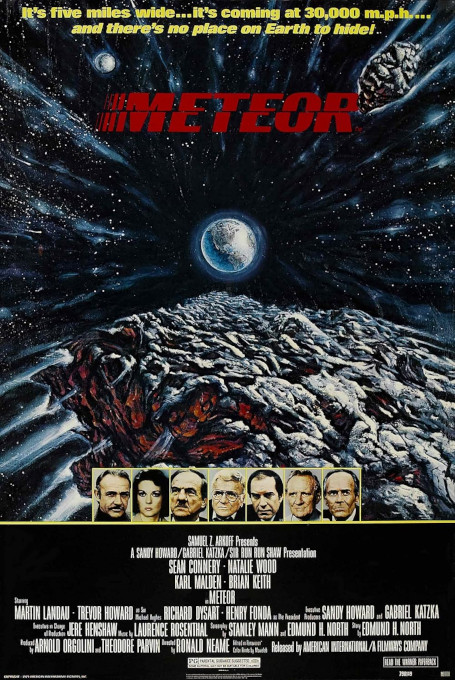
(Meteor (1979))
The answer is a guarded yes. An encyclopedic range of novels and films is cited here, often accompanied by extensive plot summaries. The saving grace is the author’s dry wit, as in this description of Meteor, a C-level movie from 1979:
“True to genre conventions, the world is saved [from an asteroid strike] but not before asteroid splinters serve up a tasty amuse-bouche of avalanches, tidal waves and toppling skyscrapers. Meteor placed viewers in the unusual position of rooting for nuclear missiles, including Soviet ones.”
Brief character sketches of real and fictional personalities also enliven the narrative. Edward Teller, the notoriously mercurial H-bomb scientist, sports “eyebrows like a gathering storm,” while Nevil Shute, author of the seminal apocalyptic tale On the Beach, has “a face like a disappointed bloodhound.”
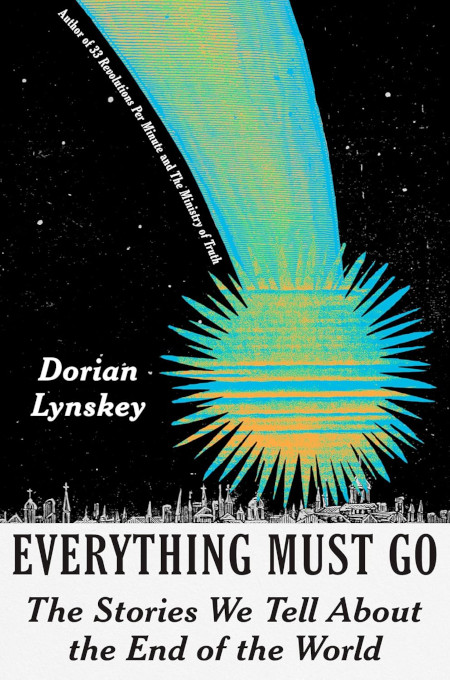
(Everything Must Go)
But by choosing not a “less-is-more” narrative approach—instead, just the opposite—Lynskey risks losing us in a blizzard of information. At some point, the admirable goal of being comprehensive must give way to reader enjoyment.
On the other hand, the author’s unstinting endeavor to cover vast amounts of material, and insert personal asides from time to time, is impressive. Roughly halfway through the book, Lynskey describes the survivalist ethos and his own misgivings about it:
“Survivalist narratives invite you to imagine yourself in that situation—would you prevail? Personally, I would consider it a miracle if I made it to the end of the week, but then the people most obsessed with survival are the people I’d least like to survive alongside.”
If reading about the end of life on this planet is your idea of a literary good time (as it recently was in Nuclear War: A Scenario by Annie Jacobsen), then you’ll come away from Everything Must Go feeling like an expert on this topic.
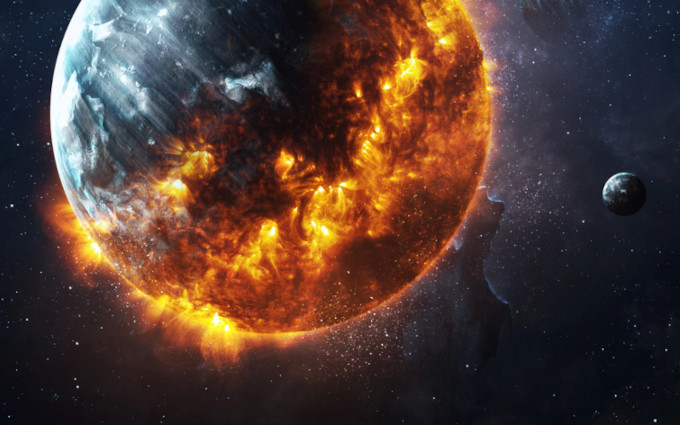
Author Bio:
Lee Polevoi, Highbrow Magazine’s chief book critic, is the author of The Confessions of Gabriel Ash, now available as an audio-book.
For Highbrow Magazine
Photo Credits: Depositphotos.com