


Last Friday, on Valentine’s Day, the infinitely loveable scion of reggaeton, Bad Bunny, released yet another video—this time for “Turista,” the languid, tongue-in-cheek ballad from the recent album, Debí Tirar Más Fotos.
For the Puerto Rican reggaetonero, whose real name is Benito Antonio Martínez Ocasio, this latest LP represents the fruits of almost continuous artistic output. In late 2023, he released nadie sabe lo que va a pasar mañana, and a year earlier, he released Un Verano Sin Ti.
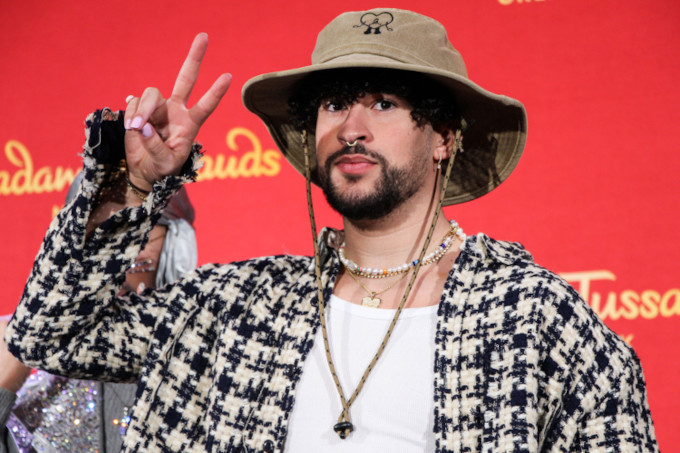
There is no doubt that this recent album represents an almost indefatigable work ethic. Reviews of Bad Bunny’s latest offering, regarded as an homage to Puerto Rico’s rich musical heritage, have been overwhelming favorable. However, even among the immense press that the Boricua pop star has garnered, amid the accolades and slew of Grammy Awards he has received, we have ignored how much the singer wants to talk about work—his work, our work, even the category of “labor” writ large.
Bad Bunny’s videos and live performances—like those of other contemporary musical artists—are rife with him completing humdrum tasks: listlessly passing out movie tickets, cleaning up after a party, or doing laundry. Should we deem this offensive cosplay of blue-collar drudgery or working-class solidarity?
What does it mean when musical artists film themselves as working-class heroes? What do Bad Bunny, Drake, and Taylor Swift convey (consciously or not) when they pose as us?
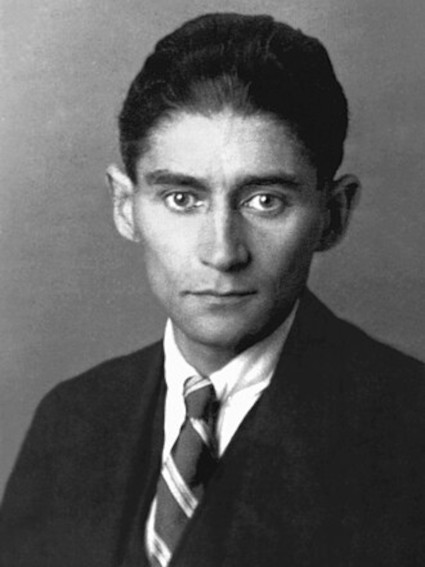

We would be remiss if we failed to note that intellectual and artistic heavyweights have mulled over these issues for some time. Franz Kafka, in his 1924 short story, “Josephine the Mouse Singer,” weaves the story of singer Josephine, who struggles with audience expectations and her own isolation as an artist. A community of mice, who spend their days toiling away, laud Josephine, even though they recognize that her voice is not particularly unique. Although a mediocre singer, Josephine aims at self-promotion: “From the beginning of her self-promotion as an artiste, Josephine has fought for the privilege of being excused from doing any other work other than her singing.”
While Eleanor Scholz proposes that Kafka’s story highlights “the delicate and sometimes strained relationship between modern artists and their audience” for Gerald Raunig, Josephine’s art constitutes creative resistance against a system that aims to commodify and control the production of knowledge. Josephine, a small, inconsequential mouse with (as Kafka’s narrator explains it) a “frail little voice,” may offer a pathway beyond society’s drudgery. She embodies her (supposed) uniqueness by evincing a “superior, condescending smile.” Perhaps significantly, Kafka’s story—this rich and meandering meditation on the relationship between artist and audience—was his parting gift to his readers. He died from tuberculosis less than two months after the publication of “Josephine.”
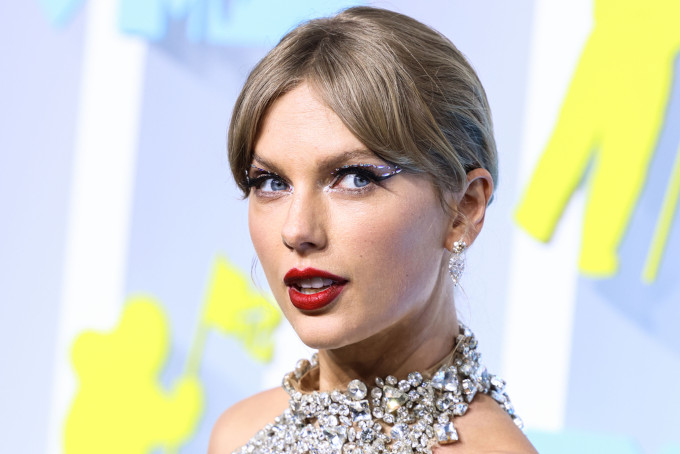
Singers from our day and age burnish their working-class bona fides differently from Kafka’s titular protagonist. While previous artists underscored their talents by emphasizing their transcendence, contemporary times—characterized by the total subsumption of labor, the decline of bourgeois society, and the constant, anxiety-inducing need to be productive—see artists spend exorbitant sums of money play-acting menial jobs on film. To what extent are these proletarian theatrics convincing?
Bad Bunny’s latest production, “Turista,” sees him working as a housekeeper who dedicates himself to cleaning up a rental house between guests. The video coincides with a recent filmic interest in domestic workers: movies like Roma, The Chambermaid, and The Maid all come to mind. Given the affective and political spirit of Debí Tirar Más Fotos, the song suggests a distaste for the ongoing Airbnb-ification of Puerto Rico, as the island becomes overrun by tourism.
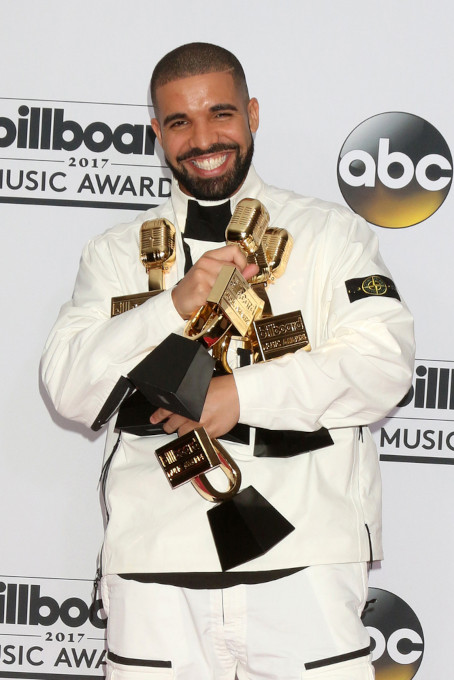
This was not the singer’s first attempt at including mundane, manual tasks as part of his act. Just last month, he performed “Voy a Llevarte Pa PR” on Jimmy Fallon’s Tonight Show, where he feigned washing clothes while drinking the Boricua working-class’s beverage of choice: limoncillo. Of course, these songs were preceded by the 2020 video for “Pero Ya No,” which saw the reggaetonero tediously tearing movie tickets in a cinema.
While the star did, in fact, work a notably blue-collar job as a supermarket cashier, his “job” performances make us wonder. Is Benito approximating his fans or can he just not dance? Is his music meant as a soundtrack for our laboring lives, an escape from the stultifying effects of work or, simply indicative of our reality: that our work is constant, that the Covid-19 pandemic transformed the time and space of labor, and that a great majority of jobs feel insignificant? Do middle-class listeners find momentary joy in seeing Bad Bunny as part of the working class? If so, why? This is something palpably different than, say, calling James Brown the “Hardest Working Man in Show Business.”

Bad Bunny is not alone. The Canadian rapper, Drake, often references working both via his lyrics and in his videos. With 2013’s “Started From the Bottom,” Drake emphasizes his supposed humble origins while acting like a drugstore clerk. More interesting for our consideration is his 2014 collaboration with ILOVEMAKONNEN, “Tuesday,” wherein it’s explained that no one has time to “party on the weeknd” and thus, they will be “goin’ up on a Tuesday.” As ILOVEMAKONNEN croons, they are “Always workin’ OT / Overtime and out of town.” For better or for worse, no longer is it appropriate to reference a drug-dealing past like, say, Jay-Z or Biggie Smalls. It’s appropriate, however, to work too much. One’s professional life is everywhere—there is no escape from Taylor Swift’s quirky, accidental-prone stage persona to have a few workplace mishaps, even as her music invades us from every angle.
When asked what they like to do in their free time, people are wont to put “listening to music” at the top of the list. However, the fact is that today’s artists make up the soundtrack of our professional lives—this endless daily grind.
In his essay “On the Concept of History,” German philosopher Walter Benjamin famously argued that “there is no document of civilization which is not at the same time a document of barbarism.” The songs here document how far civilization has—and hasn’t—come. The curious and sad bit about our present day is how much musical pleasure we take in workaday toil. We’ve even learned to sing about it.
Author Bio:
Kevin M. Anzzolin, Ph.D., is a lecturer of Spanish who arrived at Christopher Newport University in 2021, where he teaches a wide range of classes. His book, Guardians of Discourse: Literature and Journalism in Porfirian Mexico, was published by the University of Nebraska Press in 2024. His research focuses primarily on Mexican narrative from the 19th- to 21st centuries, and his work has been published in journals such as Letras Hispanas, Hispania, and Studies in Latin American Popular Culture.
For Highbrow Magazine
Photo Credits: Depositphotos.com