


Our Evenings
By Alan Hollinghurst
Random House
487 pages
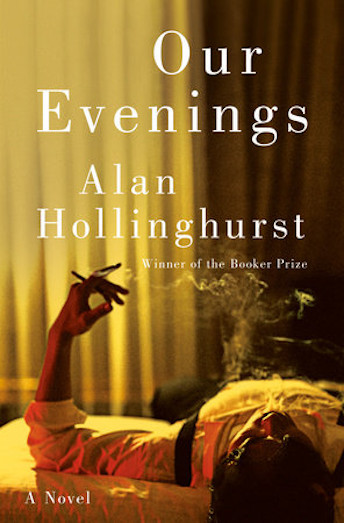
Alan Hollinghurst has a well-earned reputation as one of the great stylistic writers of our time. If this praise sounds overly exuberant, consider the beguiling opening paragraph from a prior novel, The Stranger’s Child, wherein a young girl in the English countryside impatiently awaits the arrival of a noted poet:
“… He must have missed his train or at least his connection: she saw him pacing the long platform at Harrow and Wealdstone, and rather regretting he’d come. Five minutes later, as the sunset turned pink over the rockery, it began to seem something worse had happened. With sudden grave excitement she pictured the arrival of a telegram, and the news being passed around; imagined weeping pretty wildly; then saw herself describing the occasion to someone, many years later, though still without deciding what the news had been.”
Melding colorful description (“sunset turned pink over the rockery”) with a character’s vivid internal state (“imagined weeping pretty wildly”) is a signature Hollinghurst trait. For this reader, at least, the opening pages of The Stranger’s Child made it impossible not to continue reading.
Dave Win, the protagonist in his newest novel, Our Evenings, is half-English, half-Burmese. Early on, Dave visits the country estate of Giles Hadlow, a school friend whose wealthy parents have subsidized Dave’s education at an elite school. There he encounters family dynamics radically different from those in his own home, where he’s being raised by a single mother.
The first 100 pages of Our Evenings float by, with Dave’s teenage emotional and sexual life seen through the prism of a hyper-sensitive gay man. As Dave grows older (the novel itself is a sort of birth-to-death fictional memoir), the story begins to meander. What might be unforgiveable in some other author’s work—many detailed observations of the natural world, the amount of time a narrator spends brooding over real (or imagined) slights—in his case keeps the reader involved, at least for a while.
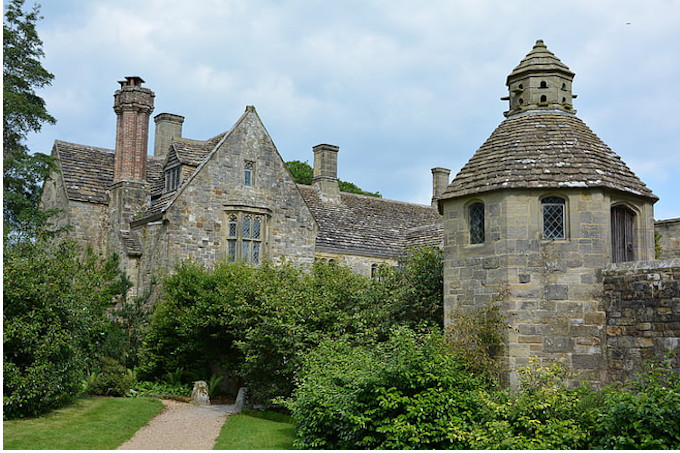
Hollinghurst’s prose in Our Evenings is as sensuous as ever. At one point, Dave wanders the Hadlow estate:
“I shivered, gooseflesh under my shirt in spite of the sun; though now and then there was a quiet lull, ten seconds of scented warmth tucked up in the cold wind that flowed endlessly over England. I ran off a few yards and gazed at the featureless circle behind us, the scruffy grass dotted with sheep droppings, even though no sheep could be seen or heard.”
As the story deepens, our understanding of Dave and the people around him deepens as well. His widowed mother moves in with Esme, a younger woman, and somehow, without being told, Dave infers they’re sharing a bed and a life together.
Later, at the home of another student’s family, everyone takes part in outdoor games, including a dusk-laden match of lawn croquet:
“Outside, we sat on a bench at the edge of the croquet lawn. The great combustion in the sky had faded and passed and we watched the others play on in the rich even light just after sunset.”
With images like these evoking a sense of dusk across the British empire, this is further demonstration, if any is needed, of Hollinghurst’s mastery of mood and setting.
Some set pieces in Our Evenings work better than others. A family party hosted by Mum and Esme is deliciously rich with subtext. A later episode, when Dave first tries marijuana, feels flat and stilted, with almost slapdash writing. And the decision to tell Dave’s story in the first person limits the novel’s scope and complexity, unlike in The Stranger’s Child or Hollinghursts’s Booker Prize-winner, The Line of Beauty.
The novel closes with an incident of violence, also unlike Hollinghurst’s previous works. Whether this succeeds largely depends on how engaged a reader has been throughout more than 400 pages beforehand.
Author Bio:
Lee Polevoi, Highbrow Magazine’s chief book critic, is the author of The Confessions of Gabriel Ash.
For Highbrow Magazine
Photo Credits: Pickpik (Creative Commons); Kathryn (Flickr, Creative Commons); Wikimedia Commons; Pxhere (Creative Commons); Pxhere (Creative Commons).
