


Directed by documentary filmmaker Joshua Oppenheimer, The End follows a Dystopian Earth where a wealthy couple -- Father (Michael Shannon) and Mother (Tilda Swinton) -- have survived by living in a luxurious salt mine. There, they raise their son (George McKay) teaching him to appreciate an affluent taste for the arts, and in doing so, enforce class stereotypes.
When a young black girl (Moses Ingram) discovers their sanctuary and formulates a bond with the son, the parents are forced to answer questions about their part in the end of the world. As the son’s relationship deepens with the girl, he quickly becomes disillusioned by the separation of class that threatens to upend the family unit in this apocalyptic Romeo and Juliet-style love story framed as a musical.
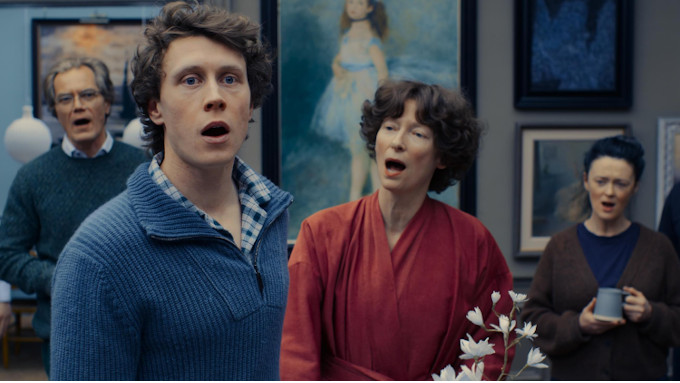
In his first narrative feature, Oppenheimer wisely focuses on the artificial division of class, a mode of storytelling present within his Oscar-nominated documentaries The Act of Killing and The Look of Silence. The End showcases the absurdity of status and wealth, as the only surviving family imposes their high-class lifestyle onto no one. In a world they helped to destroy, where there is no one left to impress, they cling to their affluence. For the Husband and Wife, their appreciation of the arts is all they hold dear, yet when the young girl discovers their sanctuary, they reject the new culture she offers.
Oppenheimer’s meticulous realization of the setting allows the family's home to feel tangible and at odds with the apocalyptic setting. Their luxurious abode is sleek, yet uninviting. With stiff, carefully arranged rooms that mirror the family's rigid appearances -- down to the buttons on the men’s freshly ironed collared dress shirts and the women’s perfectly styled hair. Living with the family are characters whose names go purposefully unsaid in the script, but are communicated by their roles to the family: Butler, Doctor, Friend. These characters provide two services, one of practicality, and another that reinforces traditional displays of wealth through their employment to the family.

Where Oppenheimer displays total control of his craft of visual storytelling, the film fails the shortcomings of its script -- specifically, the choice to tell this story as a musical. The decision is dumbfounding, in part due to the actor’s inability to sing and the director’s lack of skill in staging a musical set piece. At two-and-a-half hours, this approach drags the pacing, as the film halts to convey its themes and ideas through poorly written and painfully dull music performed by dedicated but monotone actors. There is never a moment where the use of music seems clever or original.
Oppenheimer might be using the musical format to further highlight the absurdity of this family’s detachment from reality and the lies they tell themselves; however, if that was his intent, it is poorly realized within the execution. Instead, the decision feels like a desperate attempt to attract attention with an audacious approach in the hope of achieving cult status through the inevitable critical headlines calling for The End to end.
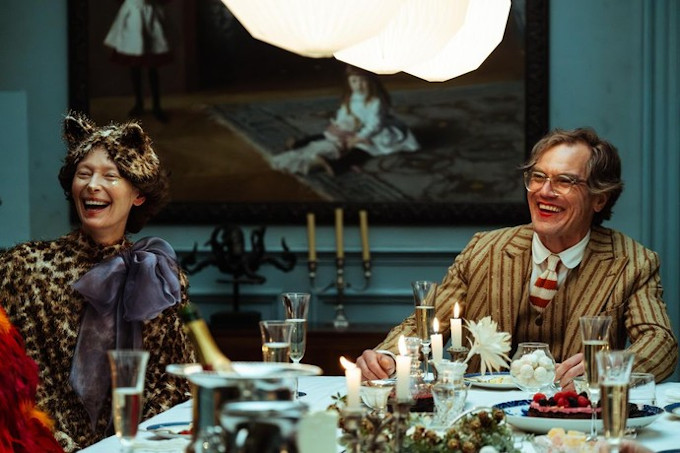
The absurdity of the film’s audaciousness is Oppenheimer’s inability to recognize the boldness imprinted within the world he crafts. Framing a story around the survival of the wealthy whose work helped bring about the end of the world, and their detachment from reality allows the thematic weight of the film to be rich in its satire rendered to near perfection through the minutiae of production design. Yet that dark comedic sensibility is lost on the director, who instead chooses to bring forth an uplifting finale where the rich who left us all for dead find earnest redemption in each other’s company, leaving us with the message of, “Maybe the rich do have a heart!”
As the world around us continues to be systematically plundered of its resources, at least we can all take comfort in the notion that in the end, the rich may still feel some resounding guilt as they sing “Kumbaya” in their underground ice mansions.
Author Bio:
Ben Friedman is a contributing writer and film critic at Highbrow Magazine.
For Highbrow Magazine