


Ahead of Nosferatu, I revisited Robert Eggers' previous films —The Witch, The Lighthouse, and The Northman— to better understand the director’s obsession with history and folklore. Eggers, whose career began as a production designer, brings an unparalleled attention to detail in his filmmaking. His painstaking historical accuracy not only recreates the past but transforms it, exploring the stories we inherit and the complexities beneath them. Though his films are set in the past, their sensibility is decidedly modern, particularly in how they subvert the male-dominated historical record.
Eggers consistently gives agency to his female characters, allowing them to explore their desires and rebel against the patriarchal norms that confine them. His films examine the power dynamics of repressive patriarchal norms, where men are incapable of understanding sexual desire, and women are forced to rebel against their shackles.
Whether it is Anya Taylor-Joy entering a deal with the devil, Robert Pattinson’s Oedipal fixation towards Willem Dafoe as they find themselves trapped in a lighthouse, or Nicole Kidman’s revelation of deceit in The Northman, Eggers' films are unified by a throughline of desire, which continues in his newest film, Nosferatu.
Nosferatu follows Ellen Hutter (Lily-Rose Depp), a German woman who desires to be an angelic wife for her husband Thomas (Nicholas Hoult). When her husband travels to Transylvania to meet Count Orlok (Bill Skarsård), a mysterious nobleman, Ellen’s carefully crafted facade cracks as nightmares of her past worsen. As Orlok’s influence grows in her town, she finds herself face to face with the count, who goes by another name, Nosferatu.
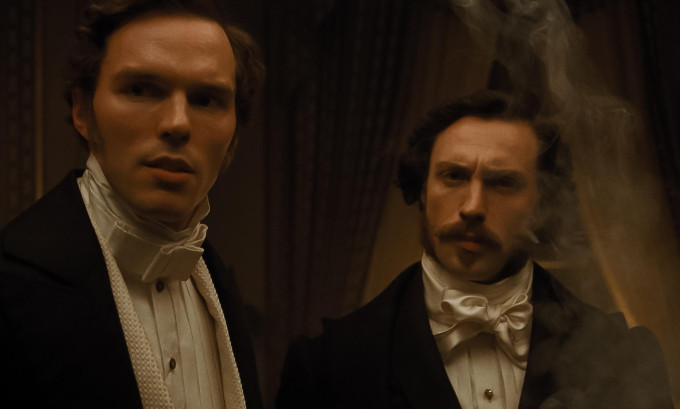
While monster films often rely on metaphor to convey their themes, Eggers strips away pretenses, allowing evil to speak for itself. 1922’s Nosferatu, a seminal work of German Expressionism and an unofficial adaptation of Bram Stoker’s Dracula, presents Ellen (Greta Schröder) as an idealized, angelic figure who saves the town from the plague of Nosferatu. Her role within the film is to be a martyr for redemption at odds with the monstrous evil that is Count Orlok. The lack of character development is a fitting reflection of the silent era of filmmaking. In contrast, Eggers gives Lily-Rose Depp the freedom to reimage Ellen, transforming her into a character with autonomy in battle with 19th-century societal norms as she seeks her own desires and asserts her agency.
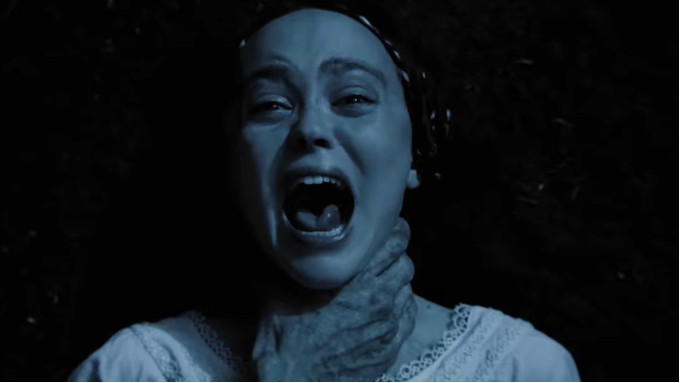
The film opens on a young Ellen praying for any spirit to bring her love, only for her to be attacked by a monstrous vision. While it would be easy to frame Ellen and Nosferatu’s relationship as that of survivor and abuser, Eggers deftly complicates this dynamic. Instead of positioning Ellen purely as a victim, the film explores her psychological and emotional responses to the monster, revealing a tension between fear, fascination, and forbidden desire that challenges simplistic narratives of consent and victimhood. Ellen is fearful and disgusted by the monster, but also feels a deep kinship that she yearns to not embrace as it is not becoming of a woman of her beauty and spirit to desire. While her husband views her as a victim of Nosferatu’s evil, which she very well may be, her kinship with the forbidden is present, challenging the audience's perception of consent.
In less capable hands, the exploration of female desire in Nosferatu could easily be misinterpreted as women’s hidden desire for victimization. Fortunately, Eggers navigates this story with nuance, allowing Depp’s performance to assert control over her character’s narrative. Depp’s portrayal of Ellen eloquently captures the inner turmoil of societal expectations and her complex desires. Depp’s carefully controlled manner and natural beauty are akin to that of a porcelain doll, and as such, the men in her life treat her delicately and in need of protection. As the story progresses, Depp’s restraint fractures, empowering her to take control of the film’s narrative.
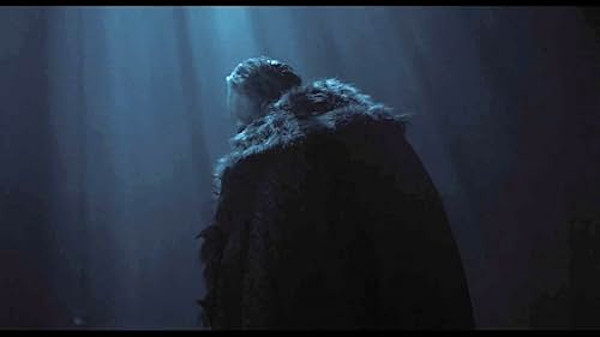
In stark contrast, Bill Skarsård's portrayal of Nosferatu is suffused with an eerie, sexual intensity, where even the act of sucking blood resembles physical pleasure. Where Ellen must regulate her desires, Orlok seeks only gratification of the flesh. When he strikes, he does not go for the neck as stereotypical for vampires, and instead opts for the victim’s heart. The power dynamics of sex are front and center. When the two are once again reunited, Depp carefully balances fear and understanding of her wants.
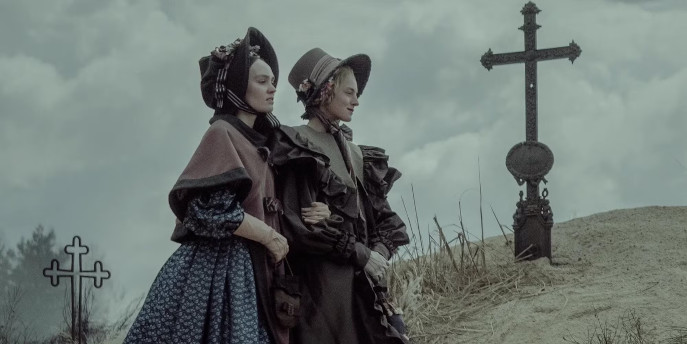
Eggers’ recreation of 19th-century Europe allows Nosferatu to serve as a reclamation of history, where women are at the forefront, while also enabling the director to take contemporary conversations and place them within an anachronistic context -- an approach to genre storytelling that he excels at throughout his filmography. His obsession with the past blends both historic text and folklore and allows the worlds he creates to feel fully lived in. In Nosferatu, it is evident of his vast knowledge of vampire depictions in mass media, enabling him to cultivate audiences' understanding and perverse them.
Through Eggers' vision, the film engages with contemporary conversations about female empowerment, the nature of desire, and the complexities of consent within the confines of patriarchal society. When Nosferatu and Ellen meet once again, the monster warns her that she must reaffirm the pact she made when she summoned him, or else the plague will destroy her town. In this encounter of the monstrous and the human, horror and desire coexist in uneasy circumstances, as Count Orlok allows the choice to be hers and hers alone, something that her husband, a kind and loving man trapped in societal norms, is too blind to realize.
Ellen is faced with an agonizing choice, but it is a choice nonetheless -- one to which the men are blind. Eggers carefully frames the film’s finale around Ellen, embodying the film’s exploration of reclaiming agency within a world hellbent on control. The tension of fear and longing shifts unpredictably, allowing the film’s climax to serve as a declaration of her desires, her complexities, and most importantly her autonomy in a final showdown of the supernatural and the human psyche coming to a head.
Author Bio:
Ben Friedman is a contributing writer and film critic at Highbrow Magazine.
For Highbrow Magazine