


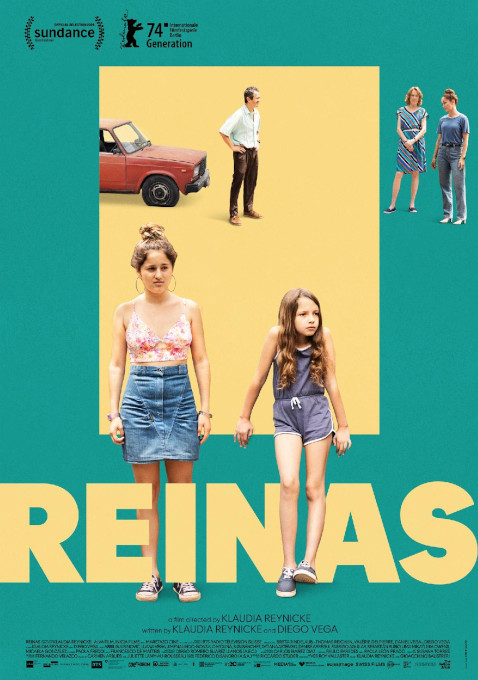
Set against the backdrop of impending economic disaster in 1990s Peru, Reinas (Outsider Pictures) explores the complex intersection of personal survival and broader social and political crises. Amid the country's spiraling poverty and violence, the film's protagonist, Carlos, is faced with a personal unraveling. An absentee father of modest means, Carlos seeks to reconnect with his two daughters before they leave the country with their mother, driven by the fear that he may never see them again.
Carlos’s story is one of fabrication. Whether it’s the shame of his abandonment or his fear of revealing the truth about his financial struggles, his outward life is built on exaggeration and fantasy. The stories he tells his children—filled with fantasies of success and heroism—are a desperate attempt to reconcile his fractured sense of self with the man he wishes to be. Despite this obvious facade, his presence is enough to gain him connection and love, which Carlos is unsure he deserves.
Where Carlos is detached from reality, the mother of his children, Elena, remains grounded in the brutal realities of their situation. A mother determined to protect her children, Elena is both the anchor and the moral compass of the family, embodying the kind of strength that Carlos desperately wants to project, but struggles to attain. Her decision to leave with the children is not just a move toward safety, but a painful acceptance of the limitations of what she can change.

Yet, despite Carlos’s appetite for dishonesty and his noncommittal personality, his actions are not out of hubris, but rather fatherly instincts. He is terrified of allowing the world to see him as a failure and specifically leaving his children with the memory of a man unable to live up to the world’s definition of masculinity. He is unable to provide due to his financial status, and unable to protect due to his inability to commit. Thus, in his mind, it would be kinder to impart onto his children a memory of a father they deserve, rather than the father they have.
In Reinas, director Klaudia Reynicke weaves a narrative that blurs the lines between reality and illusion, showing how the two often coexist in fragile balance. For Carlos, reality is something to be controlled and shaped to fit his desires. He crafts a version of himself—one that’s successful, heroic, and capable of providing—because the alternative is too painful to face. Reynicke’s aesthetic amplifies this theme; the film’s grainy, desaturated look mirrors the faded photographs that capture still moments from a past that can be manipulated to tell a story. This visual choice becomes a metaphor for Carlos’s manufactured and controlling image—one that looks increasingly hollow as reality encroaches.
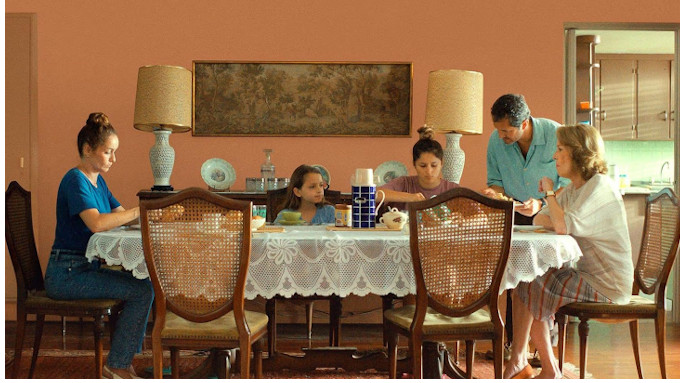
Carlos’s refusal to accept that his facade is crumbling is emblematic of his struggle to hold onto something that will ultimately fail him, as it becomes clear that he cannot outrun the tightening noose that is reality. The more he resists and attempts to shield his daughters from the truth inadvertently endangers them further.
Reinas is a devastating portrait of a family forced to make impossible decisions, shaped by the larger forces of a volatile society where fathers and mothers must sacrifice in order to protect their children from a world that is unjust.
Author Bio:
Ben Friedman is a contributing writer and film critic at Highbrow Magazine.
For Highbrow Magazine