


The Wildes: A Novel in Five Acts
By Louis Bayard
Algonquin
296 pages
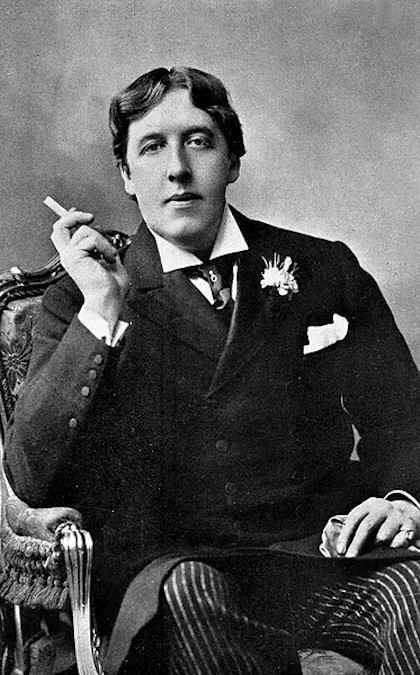
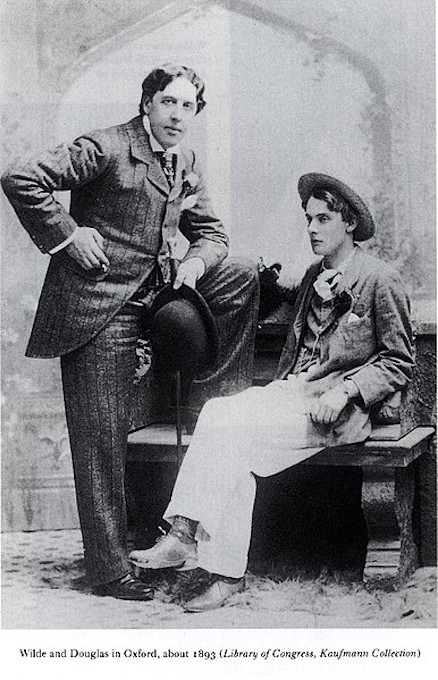
In the 1890s, Oscar Wilde was the toast of London society. With the smash success of his plays and novels (The Importance of Being Earnest, The Picture of Dorian Gray, etc.), he was famous for his wit, his eccentric public persona, and his sartorial flair. At the height of his celebrity, Wilde’s intimate liaison with a minor aristocrat named Lord Alfred Douglas came at a time when, as Lord Alfred later wrote, physical relations between men was “the love that dare not speak its name.”
Accused of sodomy by Lord Alfred’s father, the Marquess of Queensberry, Wilde sued—an impetuous act that led to his own spectacular downfall. He was tried and convicted of “gross indecency,” serving two years’ imprisonment and hard labor. After his release, he emigrated to Paris, never returning to England, and died in 1900, a broken man.
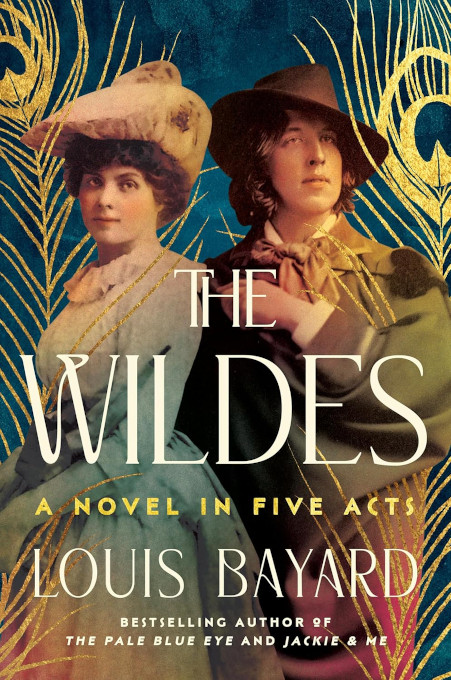
These lurid events form the backdrop for Louis Bayard’s enthralling new novel, The Wildes. But rather than focus on the celebrated playwright, Bayard tells the story through the viewpoints of family members, including his wife Constance, and two sons, Cyril and Vyvyan. Through “five acts,” the novel takes us from a farmhouse in Norfolk to the trenches of World War I and the tumultuous postwar era—years in which Oscar Wilde fades from public attention, while his family suffers the public disgrace associated with his name.
In the long opening act, “Wildes in the Country,” Oscar and his kin share the farmhouse with visiting newlyweds Arthur and Florence Clifton. Another guest is due to arrive soon—Lord Alfred (“Bosie”), a wonderfully louche character with viperish spirits and a poorly concealed love for Oscar.
Bayard keeps things moving, often with a surprising turn of phrase. Wilde “gives the back of his neck a soft feline inquisition.” Bosie, a chaos agent unleashed on the Wilde household, has eyes “the same blue as the Norfolk sky” and lips “opening like the most sequestered of fruit.”
Constance—amiable, quick-witted, but woefully innocent of her husband’s true nature—resists any notion that Oscar might not only be unfaithful but transgressing in more unimaginable ways. Armed with foreknowledge, readers are nevertheless drawn into her dilemma. We know that worse, much worse, is yet to come.
Never mind that any novel about Oscar Wilde must be at least as witty as the genius himself. The Wildes is all that, and not infrequently laugh-out-loud funny. Both his lover Bosie and his sharp-tongued mother, Lady Jane Wilde, are—how else to put it?—a hoot.
One morning, Lord Alfred joins Constance for tea at the breakfast table:
“He leans back in his chair and, in a mindless way, plunges his index finger into the hot tea, making two revolutions before transferring the same finger, pink and puckered, to the sanctity of his mouth.”
The first act of The Wildes, brimming with subtext, sets a high standard for the rest of the novel. Years go by. Oscar’s notoriety dims, the Great War ends with the slaughter of millions, and his remaining family members must grapple with lingering indignity and tragedy.
Earlier on, the house guest Arthur Clifton (a lawyer who’s worked behind the scenes to keep Bosie out of trouble, and is secretly in love with Constance) has had enough of the Wildes in the country:
“‘So much sordidness,’ says Arthur, relapsing into his chair. ‘It quite saps a fellow.’”
What fatigues Arthur proves to be of sheer delight for readers. With no disregard for the novel’s considerable literary merit, The Wildes is, above all else, splendidly entertaining.
Author Bio:
Lee Polevoi is Highbrow Magazine’s chief book critic and author of a novel, The Confessions of Gabriel Ash.
For Highbrow Magazine
Photo Credits: PublicDomainPictures; Wikimedia Commons; Wikimedia Commons.

