


Hearing Donald Trump’s Republican vice-presidential runningmate, JD Vance, chillingly denounce women who don’t have children sounded like something an authoritarian leader might say in pronouncing them as the “other” -- people who should be ostracized from society.
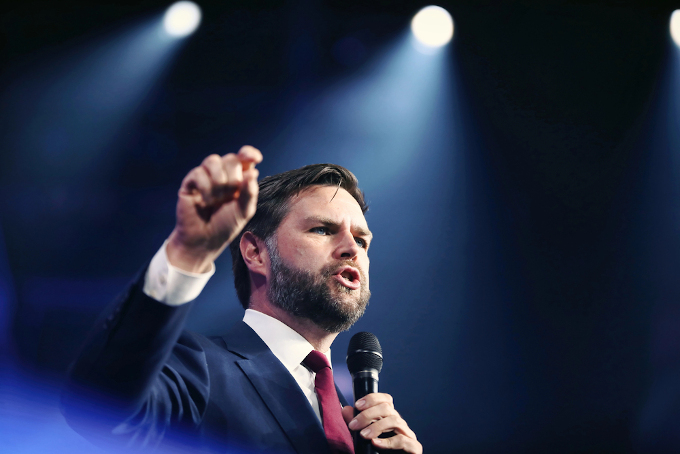
Vance said in remarks a while back that the United States is being run by a “bunch of childless cat ladies” like Vice President Kamala Harris, “who are miserable at their own lives and the choices that they’ve made, and so they want to make the rest of the country miserable too.”
Besides upsetting cats, it’s all part of a scary dystopian package that the Trump-Vance ticket is attempting to sell to American voters. It seems like a desperation tactic to win the White House in November.
What it also conjures up is making scapegoats of marginalized people who don’t fit into the category of “regular” American citizens. This “othering” of minority groups is the same ploy that Adolf Hitler and the Nazis used against Jews and other minorities to take over Germany in 1933.
Recently, doubling down on his previous statement on “childless cat ladies,” Vance said, “Obviously, it was a sarcastic comment, I’ve got nothing against cats. This is about criticizing the Democratic Party for becoming anti-family and anti-child.”
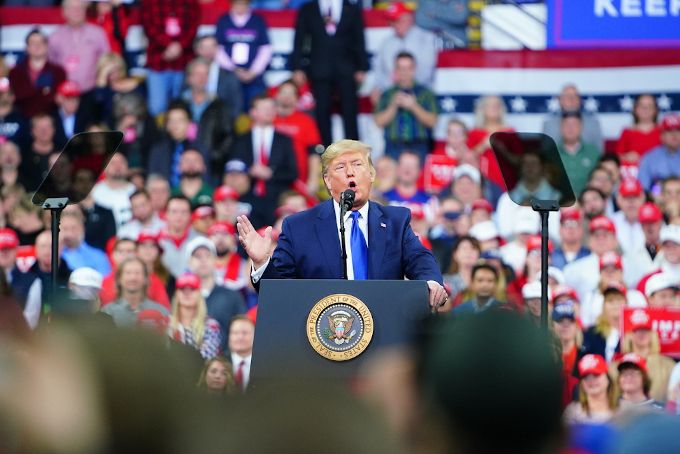
My friend Bill and I were recently discussing that it was unbelievable how the German people acquiesced in Hitler assuming power in their country. We asked ourselves how in the world could a supposedly enlightened Germany become entranced by such a madman? In the same vein, how is it possible that Trump, a trash-talking “America First” con artist, and now a convicted felon, also found guilty of sexual abuse and defamation, was elected president in 2016 and is attempting to regain the office in 2024.
Bill, a student of history, with special expertise in Hitler and the Nazis, suggested the Fuhrer knew how to take advantage of Germans’ desperate situation following World War I, in which unemployment was rampant, the country’s hyperinflation was said to become one of the worst in world history, and living conditions were deplorable, with shortages of food, fuel, clothing, and other supplies.
Hitler alleged that Germany had been “stabbed in the back” in signing the Treaty of Versailles. What resulted was the country becoming ripe for a ruthless dictator such as Hitler to take control.
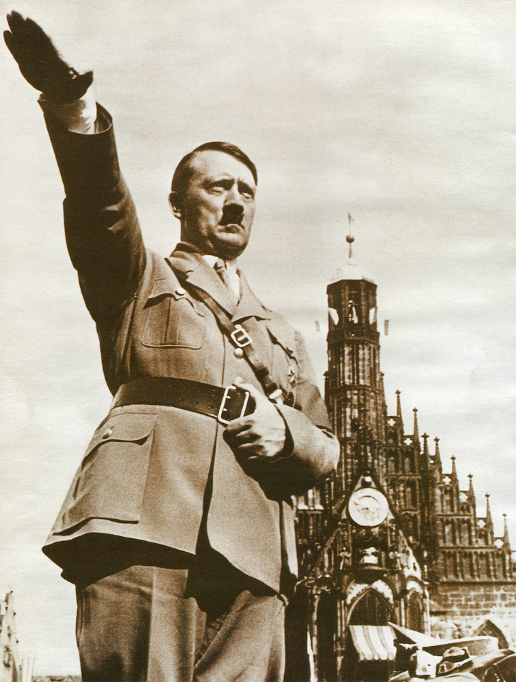
Hitler said, in so many words, he would make Germany great again in which it enjoyed an economic and technological boom. Hitler’s pronouncement sounds reminiscent of the Trumpian slogan to “Make America Great Again.”
The Nazis used an anti-Semitic conspiracy myth that maintained the German Army did not lose on the battlefield in World War I, but instead was betrayed by Jews and others. Advocates of the myth denounced the German government leaders who had signed the November 11, 1918, Armistice ending the war, calling them the “November Criminals.” Hitler was obsessed with the belief that Marxists and Jews had been behind Germany’s failure. They had to be eliminated, he said, to prevent the country from losing a World War II.
It all seems eerily similar to the tactics that Trump uses to become president again. As Maiken Umbach wrote in a recent essay in International Business Times, Trump “drums up support by blaming and denigrating groups who do not fit the imagination of a masculine, Christian, hard-working, and essentially white American ideal-type: Mexicans, Muslims, gay and transgender people, and disabled people, to name a few of the most obvious targets.”
Umbach, professor of Modern History at the University of Nottingham, wrote that Trump, like Hitler, portrays the “existing political systems as fundamentally corrupt, incompetent, and, most importantly, unable to generate decisive action in the face of pressing problems.”

This is not to say that Trump is another Hitler in exterminating people he dislikes. He hasn’t gone to that extreme. But Trump has threatened to jail and prosecute those who oppose him. Trump also called Harris, among other choice descriptions, “crazy” “nasty,” a “monster,” a “bum,” and “dumb as a rock.” For years, he has deliberately mispronounced her first name.
In the recent debate with Harris, Trump – no doubt intentionally and knowingly – spread another racist and false lie, this time about Haitian immigrants eating pets in Springfield, Ohio.
In 2016, Trump called Hillary Clinton “Crooked Hillary” and said she didn’t have “the look” to be president. Now Trump and his cronies like Vance, in the most personal terms, are belittling Harris’s background as the daughter of an Indian mother and Jamaican father.
In his 1935 novel, It Can’t Happen Here, Sinclair Lewis portrays a politician who takes over as America’s first dictator, a reference to Hitler becoming absolute ruler of Germany. In what sounds strangely Trumpian, Lewis has this politician, Berzelius Windrip, issue a proclamation called the "Fifteen Points of Victory for the Forgotten Men.”

Point 12 of this proclamation, which sounds like something JD Vance might say, proclaims that “all women now employed…be assisted to return to their incomparably sacred duties as home-makers and as mothers of strong, honorable future Citizens of the Commonwealth.”
In that same vein, Philip Roth’s 2004 novel, The Plot Against America, depicts an anti-Semitic United States where America First advocate and Hitler admirer Charles Lindberg defeats Franklin Roosevelt in the 1940 presidential election. This all occurs while the country is witnessing Jews being persecuted.
Trump, a reputed admirer of Russian authoritarian leader Vladimir Putin, told a TV interviewer that if elected, he would be a “dictator” on Day 1 of his presidency. When he repeated that comment at a campaign rally, the crowd cheered and clapped.
Which makes one ask: Can the horrifying “IT” happen here in the United States in 2024? We hope not.
Author Bio:
Eric Green, a Highbrow Magazine contributor, is a former newspaper reporter, U.S. congressional press aide, English-as-a-second-language teacher, and now a freelance writer in the Washington D.C. area. His articles have appeared in various newspapers and websites, including the Washington Post and Baltimore Sun.
For Highbrow Magazine
Photo Credits: Depositphotos.com