It is also difficult to enforce this law with Supreme Court justices, since there is no higher judicial body in the country that can review the justices’ actions. Congress could pursue impeachment of a justice for violating this law. But, as is the case for other government officials, if the House of Representatives votes to impeach a justice, removal from office still requires a two-thirds Senate vote – a very tall order.
It is this same argumentative viewpoint of legality and fairness that originalists use to call into question the Roe v. Wade decision. It’s why there are still lawsuits making their way up to the Supreme Court that seek to overturn Obergefell and Roe v. Wade. And this is a slippery slope because in its quest to “limit” judicial power, originalism places the burden of slow progress in the hands of the people while erroneously assuming that everyone has equal representation in Congress.
Brian J. Purnell, Morgan Marietta, and Neta C. Crawford
One area that the Biden administration will surely address is policing and racial justice. The Justice Department can bring accountability to police reform by returning to practices the Obama administration put in place to monitor and reform police departments, such as the use of consent degrees. More difficult reforms require redressing how mass incarceration caused widespread voter disenfranchisement in Black American and Latino communities.
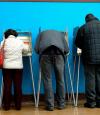
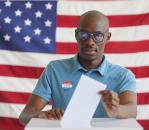
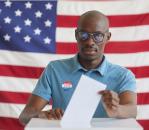
Too often lost in the furor, however, is the far more damaging TrikiLeaks – the tricks and laws used to suppress the vote by partisans, largely Republicans here at home. After the Supreme Court’s right-wing gang of five gutted key sections of the Voting Rights Act in Shelby v. Holder, Republican-controlled states immediately ramped up efforts to create obstacles for voting, particularly for people of color.
According to Mr. Tam, the name worked because it allowed these young, cutting-edge performers to talk about their “slant” on life as musicians of color, and also to pay tribute to those Asian Americans who had been using the racially-loaded term in a “re-appropriated, self-empowering way for about 30 years.” Mr. Tam argued, sensibly enough, that “irony and wit can neutralize racial slurs, because it shifts the dynamics of power.”
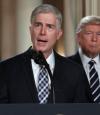
Even worse than the GOP’s ramming Neil Gorsuch on the high court, is what Gorsuch is now poised potentially to do on the SCOTUS. He can comfortably over the coming years do exactly what his Constitutional Originalist Siamese Twin Clarence Thomas vowed that he would do and has been as good as his word. That’s take revenge in his dissents, opinions, writings, and most importantly, rulings on the most crucial cases of the era against his opponents.
The only reason that Gorsuch hasn’t matched his mentor and idol Scalia’s 19th century grounded voting record on key cases, is because he hasn’t been on the court for the decades Scalia was on the high court. But there’s enough in his thin resume on some cases that pertain to abortion rights, Planned Parenthood funding, a powerhouse federal judiciary, and most menacingly the strictest of strict reading of the constitutionalism, branded “originalism,” to serve as fair warning of what’s to come if he gets on the SCOTUS.
At the end of this year’s U.S. Supreme Court session, the highest ruling body in the land handed down a decision that put a major American retailer on the wrong side of the law. In 2008, a young Muslim woman interviewed for a sales position at Abercrombie & Fitch and, after being recommended for hire by the interviewer, was denied the position because she did not conform to the company’s “look policy,” which states certain rules on attire and appearance that its employees must follow. One
In a 6-3 ruling handed down by the high court Thursday, the justices said that the 8.7 million people like Richardson who are currently receiving subsides to make heath insurance affordable on the exchange will continue receiving it no matter where they live. The ruling was a resounding affirmation of Congress’ intention of subsidizing insurance coverage under ACA.
Last summer, the United States Supreme Court invalidated the Section 4 coverage formula in the Voting Rights Act that required jurisdictions with a demonstrated history of voter discrimination to “pre-clear” any changes in voting laws with the Justice Department of a federal court. The ruling effectively neutered Section 5 of the VRA.“Four states formerly covered by Section 5 of the VRA – Texas, Louisiana, South Carolina and Georgia – rank as the worst offenders."
If relatively simple songs are being underanalyzed, we also lose the power in more complicated expressions of protest in songs like Springsteen’s “Born in the U.S.A.” The song’s triumphant chorus, which chants “Born in the U.S.A.,” often overshadows its darker verse.
Professional baseball faced a similar postwar influx. More than 500 major leaguers and 4,000 minor leaguers had swapped jerseys for military fatigues during the previous four years. Two former big leaguers, Harry O’Neill and Elmer Gedeon, plus more than 100 minor-league players, lost their lives.