
Crime, Punishment and Exile in Richard Ford's 'Canada'
Posted Thursday, June 21, 2012 - 10:35 pm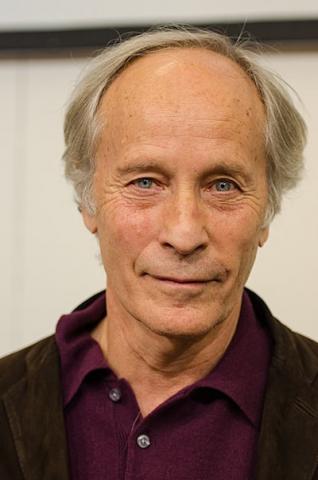
Canada
Richard Ford
Ecco
432 pages
The bravura opening of Pulitzer-Prize-winning author Richard Ford’s new novel suggests a story heavy on plot (“First I'll tell about the bank robbery our parents committed. Then about the murders, which happened later.”). But this is misleading. There will be a bank robbery and murder, but the story about 15-year-old Dell Parsons and his troubled family, told by the narrator at a much older age, encompasses far more than these sensational elements. Canada is a deeply ruminative work, written in spare, evocative language. It is, above all, a novel about voice.
In Great Falls, Montana, in 1960, former air force officer Bev Parsons and his wife Neeva struggle to make ends meet and care for their twin children, Dell and Berner. Bev is a serial job-holder and entrepreneur not especially concerned with the ethical implications of his activities. When the real world fails to meet his demanding standards, he finesses his methods to gain what he feels is rightly his; when his efforts end in failure (as they often do), it is the fault of others, never his own. His wildly incompatible wife is captive to the rise and fall of Bev's fortunes, as are their children. But after an ill-conceived scheme to sell stolen beef to a railroad dining car goes awry, the fragile Parsons home is sundered forever.
Arriving at this pivotal moment, however, takes a fair amount of time and a significant number of pages. Dell talks at length about his own modest ambitions, involving chess and beekeeping, while his twin sister fumes over typical adolescent grievances, but also with a prescient sense of the family's ultimate plight. What Ford gives up in narrative tension is balanced with indelible portraits of these family members, most especially Dell’s mercurial and boundlessly hopeful father:
“For a little while after he arrived he strode around the house, talking — talking to our mother in the kitchen, talking to Berner and me, sometimes just talking to himself. He was loose-limbed and relaxed and looked into all the rooms, as if he'd just noticed how clean they were. His speaking voice was confident and sounded to me more Southern than usual, which was the way he talked when he felt unguarded, or when he told a joke or had a drink. The changing effects of modern life were on his mind: There was a satellite in the sky now that predicted the weather and looked like a star at night. He thought this could be a boon to aeronautical navigation.”
The details of small-town life in the American West are, as always in Ford's work, richly imagined and closely observed. These details, along with looping meditations on luck, the follies of heredity and the tragedy of bad choices, occupy much of the story in Canada, and would become tiresome if not for the narrator's poignant and elegiac voice.
Dell is dimly aware that trouble is brewing, but it is the much older adult who relates the events of the botched robbery of the Agricultural National Bank in neighboring North Dakota:
“This moment—the moment of proclamation, the gun revealed, the stagy commands of ‘don't move or I'll shoot’—may have been the moment when our father most truly enjoyed and revealed himself ...when he felt the exhilaration to be doing what he'd so long wanted to do, feeling not only that he'd earned the chance, due to circumstances going unfairly against him (the Indians, the jobs, the Air Force, my mother), but also that an armed robbery was a satisfactory solution and compensation, since he wasn't really stealing from depositors but from the government, for whom he'd sacrificed much, killed thousands, been a patriot, and which had infinite resources to assure that no innocent person lost a penny, while he solved our family's problems in one deft swoop.”

Those moments when a life is determined, when one's true character is revealed, lie at the heart of this thoughtful, yet overlong novel. It's no surprise when the boy's parents are apprehended for their crime and the family breaks apart. Berner runs away to California, while Dell, alone and bewildered, ends up in a desolate small town in Saskatchewan, under the questionable protection of two shady characters with their own histories of bad choices and bad luck.
Weeks of exile turn into months. When it becomes clear there's no turning back, the reader is subjected to meditations at even greater length than before—and without the pressing urgency of a crime about to occur (another one will happen, as predicted on page one, but at some indefinite point), Ford slows the narrative down to a crawl. He simply will not move the plot forward a minute sooner than he has to.
It's a good thing he excels at capturing stasis, a sense of life suspended, and the contributing effects of the surrounding landscape. Dell retreats to a room in a backwater hotel where men from many other places are “thumping up to their rooms, laughing and coughing and hocking and clinking glasses.” The young boy's forlorn condition is deftly mirrored by more late-night noises:
“It was then I could hear single men's voices out on the cold main street of Fort Royal, and car doors closing, and a dog barking, and the switchers working the grain cars behind the hotel, and the air brakes of trucks pausing at the single traffic light ...”
That dog barking in the lost hours of a Canadian night tells us all we need to know about the consequences Dell Parsons suffers due to his parents' quixotic pursuits. Canada is a novel that lingers in the reader's mind and achieves a haunting life of its own, a testament to Richard Ford's skill and single-minded vision.
Author Bio:
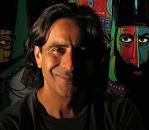
Lee Polevoi, chief book critic for Highbrow Magazine, is the author of a novel, The Moon in Deep Winter.
For Highbrow Magazine
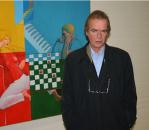
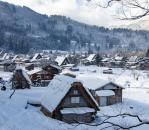
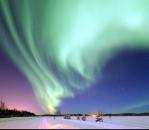
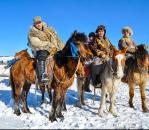
Photo credit: Arild Vagen (Wikipedia.org, Creative Commons)
Popular:
not popular
Photographer:
Canada.com
Bottom Slider:
Out Slider
most popular