
Category

News & Features

Fordism and the Fast-Food Industry

By William Eley

With the disclosure of these tax dollars’ appropriation as means to lowering the cost of the production of unhealthy foods (did not find a single green vegetable on the EWG’s subsidy list, unless we count tobacco), and the price of those same foods being utilized to set a “living” wage, then the failure of that wage to keep a full-time worker above the poverty line that subsequently requires additional supplementary funds to marginally offset this labyrinthine injustice, what else must be made clear? 

When Did Christmas Become So Commercial?

By Lorraine Chow

According to Pew, a third of Americans actually see Christmas as more of a cultural holiday, while others said it was both, or gave no opinion. Even the “religiously unaffiliated” get in the spirit: among atheists or agnostics 87 percent say they still celebrate Christmas. The country is also aging out of the religious aspects. Younger adults were the least likely to see Christmas as a religious holiday, at 39 percent, compared with 66 percent of those aged 65 or older.

Number of Black-Owned TV Stations Plummets to Zero

By Joseph Torres and S. Derek Turner

We just experienced a shameful milestone in the history of U.S. media — and barely anyone noticed. There are now zero black-owned and operated full-power TV stations in our country.This sorry state of affairs is the culmination of a trend that started in the late 1990s when Congress and the Federal Communications Commission allowed massive consolidation in the broadcasting industry. 

'Tis the Season for Escalating Credit Card Debt

By Zenitha Prince

African Americans have been pummeled by the recent financial crisis, including facing the most adverse consequences of credit card debt and higher interest rates, according to a recently released study by the NAACP and Demos, a U.S.-based research and policy center. Findings from “The Challenge of Credit Card Debt for the African-American Middle Class,” indicate that Black Americans suffered disproportionate economic losses since the Great Recession, weathering the highest jobless rates, steepest declines in income and deepest cuts into their assets and investments.

The Grinches Who Stole Jobless Benefits

By Imara Jones

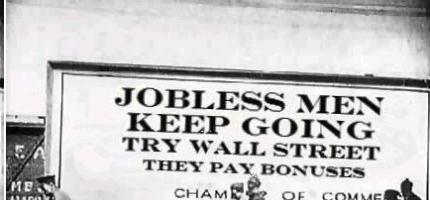
While the week before Christmas is a time when most Americans begin to pay less attention to the outside world in order to focus on friends and family, 1.3 million people will find that nearly impossible. That’s the number of the long-term unemployed—individuals who’ve been jobless for more than six and a half months—-whose unemployment benefits will expire just days after Christmas. The long-term unemployed are disproportionately people of color.

Bringing Broadband to Detroit

By David Alexander Bullock

Detroit is a city that is very familiar with poverty, especially in its low-income and minority communities. Among other financial ills, the city is suffering from a rapidly shrinking tax base as people flee the city to go to other cities where more job opportunities are present. But Detroit has an opportunity to turn its situation around by embracing technology and reinventing itself as the “Technology Hub of the Midwest.” Detroit needs to position itself as the place where technology meets the future economy. 

In Egypt, the Revolution That Many Regret

By Andrew Lam

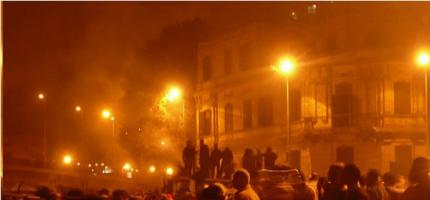
“Before the revolution,” said the 28-year-old, “I worked so hard that I begged for one day off a month and the company always said no. Now I get to do three jobs a month and I have to beg them to pick me.” It’s a phrase you hear often in Egypt. “Before the revolution,” locals say, things were bad but manageable. Before the revolution, everyone hated the same regime. After the revolution, hope has turned to fragmentation and fear. And tourism – once a mainstay of the economy – has slowed to a trickle. 

Gun Ownership and the American Male

By Leonard Steinhorn

Perhaps we are asking the wrong questions in our national gun control debate. The issue is not whether we should have gun control laws in this country — or what they should be.The issue, really, is why so many white middle-American men view any effort to regulate firearms as an assault on their very identity – and thus fight sane and rational laws as if their lives and liberties were at stake.