Category

News & Features

A Glimpse Inside the Desolate Streets of Ferguson, Mo.

By Andres Tapia

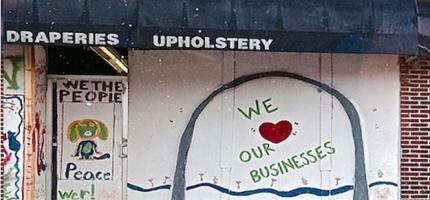
It’s breathtaking enough walking through the business district along Florissant Ave. to see one storefront after another still boarded up either because of broken glass or as a prevention against vandalism or looting. But that scene does not ready my companion and me for the devastation a few streets over on West Florissant Ave., the epicenter of the worst violence in the wake of the non-indictment of police officer Darren Wilson for the deadly shooting of unarmed teenager Michael Brown.


Why Americans Still Don’t Understand Net Neutrality

By Emily Smith

On Facebook, Cruz wrote that net neutrality is equivalent to Obamacare for the Internet, and that the Internet shouldn’t operate at the speed of government – probably no one is arguing with that last point, but Cruz’s argument that net neutrality is the “biggest threat to the Internet” is the perfect example of the issue’s branding, or lack thereof, and the cloud of confusion that surrounds it. For Republicans, Cruz’s argument has defined net neutrality as an antagonist of the free market – a staple of the conservative diet – instead of its true identity as a proponent.

The Rise of Sex Tourism in Thailand

By Michael Verdirame

the category of sex tourism has resulted in major economic gains for countries like Thailand that have become known for its availability.  According to their website, the World Tourism Organization defines sex tourism as “trips organized from within the tourism sector, or from outside this sector but using its structures and networks, with the primary purpose of effecting a commercial sexual relationship by the tourist with residents at the destination.”  Stated more plainly, sex tourism is travel for the purpose of engaging in sexual activity with the people of a particular place. 

Four Reasons Why the Keystone XL Pipeline Might Not Be Built

By Mark Trahant

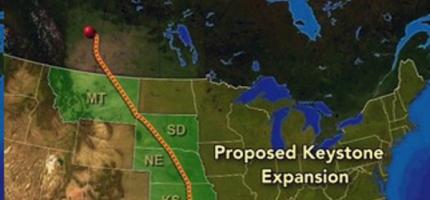
The fact is that there is no way any politician can justify Keystone and still say it’s time to take stronger action on global warming. As Bill McKibbon’s 350.org puts it: “President Obama says that he will reject the pipeline if it poses a risk to the climate. That makes his decision simple: building an 800,000 barrel-per-day pipeline of the world’s dirtiest oil will mean more tar sands dug up and burned, and more carbon pollution.”


Is Obamacare Really in Danger in the New Congress?

By Charles D. Ellison

The short answer is that in all probability, the Affordable Care Act isn’t going anywhere, but there’s a good chance that after a couple of years, it won’t be exactly the same ACA some of you love and others hate. To recap: Democrats pretty much handed over Senate control to Republicans because, among other things, they couldn’t figure out how to come up with a solid health care message in 2014—when all they had to do was wrap it nicely into a coherent economic pitch. 

The Many Conflicts of the Colorado Personhood Debate

By Rebekah Frank

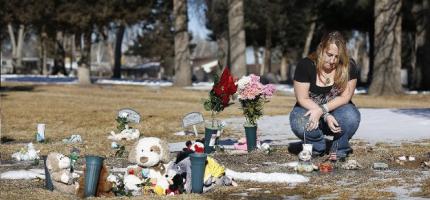
It is understandable that in the aftermath of such a tragic accident Heather Surovik and her family would want some sort form of justice. This seems especially true considering that this accident, and others like it, could potentially have been avoided had Colorado had more severe punishments on the books for people repeatedly pulled over for driving while intoxicated. There was a move back in 2009 to increase punishments for repeat offenders but, citing the high cost of incarceration, the Colorado legislature declined to approve the measure. 

My Civil Rights Year

By Paul Kleyman

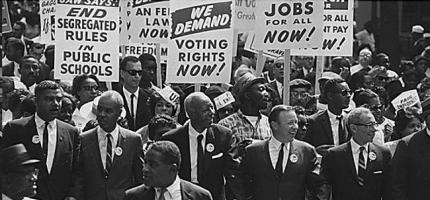
My Selma experience was deeply sensory, staying up all night in the basement of the Brown AME Chapel making coffee for people, moving to the rhythmic speeches and songs in the church sanctuary, crowding into the back of a pickup truck to go to the march after a chilly, pre-dawn rain—and walking 19 miles in tennis shoes (decades before “cross trainers”), only to peal them off in Montgomery and plunge my feet into the happy coolness of red mud.

Supporting Freedom in Cuba

By Charles Crawford and Pratik Chougule

Unexpected jolts can quickly unravel authoritarian regimes.  Maybe 2015 will see Cubans responding en masse to the more flexible policy adopted by the Obama Administration, massing in the streets and forcing a showdown with the Castro regime.  If they succeed in breaking the back of the communist system, how might a new democratically elected government start to put things right?