
Category

News & Features

Study Rates Indian Americans as Most Successful Immigrants in the U.S.

By Sunita Sohrabji

 Indian Americans are the most educated population in the United States, with more than 80 percent holding college or advanced degrees, stated a report released in June by the Pew Research Center. Indians Americans also have the highest income levels, earning $65,000 per year with a median household income of $88,000, far higher than the U.S. household average of 49,000, according to the survey. 

Obama, Justice Roberts and How the Crucial Health Care Victory Will Affect Millions

By Mark Bizzell

Shakespeare's plays all begin with a conflict that is well underway by the time the curtain goes up.  A divided court, controversial law, and a presidential election five months away took center stage in this summertime drama.   In what seems to be the climax for President’s Obama signature legislation, we are actually in the midst of the greatest health care transition this country has ever seen. 

More Than 50 Years Later, the Spirit of Revolution Lives On in Cuba

By Roger Burbach

In Cuba change is in the air. But such change should not be read as an end to the revolution. “The United States and the exile community are dead wrong if they think that regime change will take place at any time in the near future,” said Julio Diaz Vazquez, a professor at the Center for Investigations of the International Economy at the University of Havana. Whether one talks to government and Communist Party officials, university professors, or simply to people on the street, it is clear that in Cuba, socialism is very much alive and well.

The Crisis of ‘the Humanities’

By Emma Mincks

In the current economic climate, and with the boom of the technology industry, college students may be drawn to fields like computer science, business, and avenues of study that lead into specific career paths. On the other hand, many students who graduate with degrees in the liberal arts and humanities struggle financially after graduation, even to the point of  requiring federal assistance. This struggle is part of an ongoing conversation of the “crisis” in the humanities and a concern for those who are trying to succeed with degrees in English, Art, History, and Philosophy, to name a few.

War on Drugs to Escalate as New Mexican President Prepares for Office

By Louis E.V. Nevaer

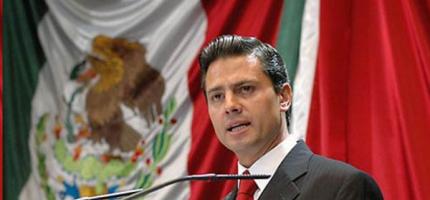
In the wake of Mexico’s presidential election Sunday, analysts are expecting Mexico to launch a major “blitzkrieg surge” against the drug cartels during current president Felipe Calderon’s lame duck period. President-elect Enrique Peña Nieto won’t take office until Dec. 1, leaving a five-month period during which Mexico is expected to intensify its drive against the drug cartels.

The Descendants: PTSD and the Latest Generation of War Casualties

By Mike Mariani

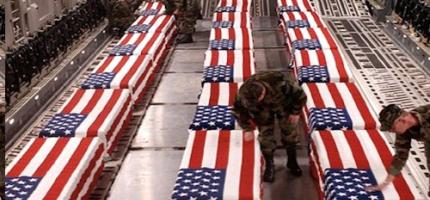
While war may be hell in every generation in which it rears its bloody-horned head, the participants are never the same. There is simply no accounting for the differences between the men fighting in Afghanistan and those who fought in, say, the Guadalcanal. Because of this, we must not treat veterans of the wars in Iraq and Afghanistan as if they have a precedent. They do not. Theirs is a war of insidious casualties, where so much fighting takes place in the days, months and years after they've returned home. Although the same could be said for all modern American conflicts, the psychological struggles veterans face have seemingly become darker and more daunting in recent years. 

Jesse Ventura on Politics, Keith Richards, and Why He’s an Atheist

By Christopher Karr

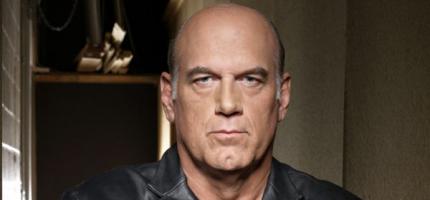
Jese Ventura’s no fool when it comes to performance. He’s more than a TV personality. Before he was elected the governor of Minnesota in 1999, he was a professional wrestler, and before that, a Navy SEAL-turned-member of an outlaw motorcycle club in San Diego.  He’s appeared in a number of movies and TV shows, and has lectured at Harvard University. When I mention to Ventura that he taught one of the most popular courses at Harvard, he quickly cuts in to correct me: “It was the most popular. My class was the biggest class in Harvard history.”  Read Christopher Karr's interview with Jesse Ventura. 

The Long and Necessary March to American Health Care Reform

By Matthew Rudow

Talk of the end of American exceptionalism seems to be everywhere lately, but in at least one area, the United States inarguably reigns supreme.  Currently, per capita health care expenditures in the U.S. are approaching $8,000 a year, far more than anywhere else in the world.  The nation with the second-highest per capita cost, Norway, spends  $2,500 less per person per year.  What do Americans get for their money?  A life expectancy of 78.2 years, slightly ahead of Panama and Libya.