
Category

News & Features

Spotlight on Rubio, Castro at Conventions Masks Reality of Issues Facing Latinos

By Al Dia

They may well be the future of their parties — Rubio, the Cuban-American Republican, is 41; Castro, the Mexican-American Democrat, 37. In their speeches — hyped relentlessly before and after the fact — they drew on stories of their immigrant families. This is the reality of the magic act we saw: Both parties are trying to claim the hearts of Latino voters. This is the deception behind the magic: Both parties are breaking Latino hearts when it comes to immigration.


Democrat v. Republican: What’s the Difference, Really?

By David Barwinski

But it’s clear that most members of Congress are not really loyal to their party ideologies the way their constituents who voted them into office are.  They are loyal primarily to political expediency, which for them really means, “How will this vote affect my political career/ability to get re-elected?”   Since 2008, there has been a slight shift in voter registration as 2.5 million people have left the Democratic and Republican parties, while the ranks of the Independents has seen a modest increase. And what about when the POTUS  gets into office?  How many of his campaign promises does he actually keep?

Creating Digital Identities: Recording Our Lives (and Others’) Online

By Andrew Lam

So many of us now have been raised on video games, cell phones and iPods. We’ve spent a large bulk of our lives in chat rooms, on Skype and posting videos to YouTube, to the extent that we’ve become news reporters and newsmakers, without even making much of an effort. We announce our actions and, in some cases, our impending demise online without giving it much thought. We have been so conditioned to invest our emotional life in the virtual space that it has become second nature. 

#IHeartPresidentialElections: Obama, Romney and the Social Media War

By Loren DiBlasi

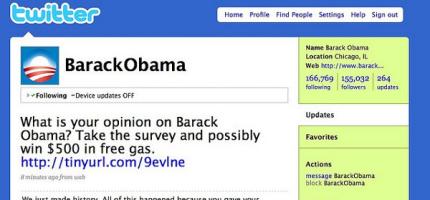
Once again, the Obama campaign has done a great job of engaging voters through the two most popular social media platforms, Facebook and Twitter, with Romney right on his tails. Ironically, the candidates’ official sites appear to be nearly identical to each other; loaded with pictures, facts, and links for visitors to click if they happen to be feeling generous, they seem more like personal blogs than campaign sites. This sort of behind-the-scenes, intimate approach works well for both candidates. President Obama’s Twitter account, for example, often feels like an extension of his own diary. 

Longevity Gap Between the 'Two Americas' Links to Education

By Paul Kleyman

The longevity gap between “two Americas” has widened since 1990, says a new study. One America is mostly white and well educated, and the other is ethnic or undereducated  and dying about a decade sooner than their more affluent counterparts. The gap between college-educated whites and African Americans who did not complete high school is “simply unbelievable,” stated S. Jay Olshansky, lead author of the extensive new analysis published in the August issue of the prestigious health policy journal Health Affairs

Is Buddhism the New Kabbalah? Ask Bill Clinton

By Andrew Lam

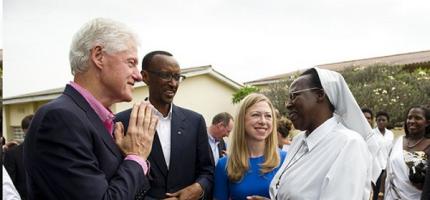
Buddhism made a bleep in the news early this month when the Times of India and other news outlets, citing an unnamed source, reported that Bill Clinton, has turned to Buddhism for mental and physical well-being. The former president went so far as hiring a Buddhist monk to teach him the arts of meditation. This may come as a surprise to some but to many others, it's only a natural course of how things transpire in the globalized world. For if Americanization is a large part of globalization, the Easternization of the West, too, is the other side of the phenomenon.


The Apple v. Samsung Verdict Sheds Light on the Future of Innovation

By Tong-hyung Kim

The real issue is whether the framework of the century-old patent laws, which served as the basis for the San Jose decision, has outlived its essential usefulness for inspiring innovation. The essential process of this involves building upon and improving the works of others. This was precisely the real genius of the late Steve Jobs as he converted the touch-screen computer from a colossal flop to a mainstream consumer device and invented smartphones on the basis of ideas that he couldn’t claim to be his and his alone.

All About Me: How Memoirs Became the Literature of Choice

By Veronica Giannotta

Memoirs are the great equalizer of writing. In a genre utterly non-denominational, there is room for any story in any pattern of prose. The Christian Science Monitor reports that memoirs have seen sales increase from $170 million to $270 million since 1999. Most nonfiction MFA writing programs are geared substantially towards the genre; Hunter College even requires prospective students to submit a memoir proposal as part of their application.