
Category

News & Features

A Quiet Revolution Brews in Mexico

By Kent Paterson

As immigrants rally in cities across the United States today, another drumbeat of protest and revolt beats loudly in southern Mexico. Beginning as a teachers’ strike against a new federal education law last February, the protest is now transforming into a broad popular movement against not only the much-touted Pact for Mexico policies of new President Enrique Pena Nieto, but also the political and economic structures they are based on.


How Wikipedia Fell into the Gender Gap

By Sandip Roy

But Wikipedia’s women problem is different. It’s not about the clumsiness of describing Kamala Harris as California’s first female African-American Indian-American attorney general. Like much of the online world Wikipedia has a gender gap. But as it has become the default go-to site for information, its gender gap is showing in embarrassing ways. In 2011, Noam Cohen wrote in The New York Times that the contributor base was barely 13 percent women. That means there’s gender bias that shows up in the very act of deciding what topic is worthy of meriting a wiki entry and how long it is.

The Devaluation of the Time-Honored Law Degree

By Alexander Ostrovsky

A group of the top law professors in the country called the Coalition of Concerned Colleagues met this past March to discuss and publish their concerns over the alarming devaluation of legal education. As the New York Times noted in a January 30, 2013 article, “Law school applications are headed for a 30-year low, reflecting increased concern over soaring tuition, crushing student debt and diminishing prospects of lucrative employment upon graduation.” Faced with this new reality in the legal field, the coalition met to discuss how the law degree is losing its value. 

Amidst Threats of War, N. Korea Grapples With a Struggling Economy

By Peter Schurmann

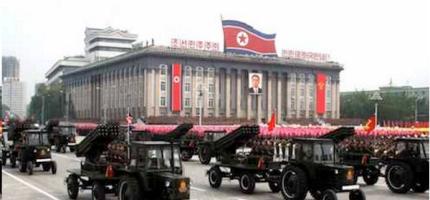
In the mounting war of words North Korea is having with the United States and its allies, it’s easy to believe who the chief aggressor is. A bankrupt dictatorship more interested in arming itself than feeding its populace can hardly expect a sympathetic audience. Yet signals coming from inside the communist nation – via headlines, reporters, tourists and business people alike – are turning that picture on its head.


The Humanitarian Side Effects of Sanctions Against Iran

By Maziar Shirazi

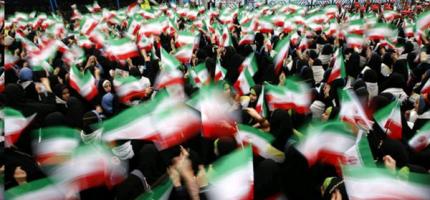
 Iran’s nuclear program, on the other hand, is alive and well. Vice President Joe Biden practically bragged of the economy-crippling effects of the latest round of sanctions during last year’s vice presidential debate, even as his Secretary of Defense acknowledged that despite U.S. efforts, Tehran remained intent on advancing its nuclear program. Indeed, the IAEA’s latest report shows that if anything, Iran is likely expanding its enrichment capacity. Iran’s civilians, however, find themselves in the midst of one of the worst medical supply shortages in the nation’s long history.

EPA, Green Organizations Criticize State Dept.’s Keystone XL Pipeline Review

By John H. Cushman Jr.

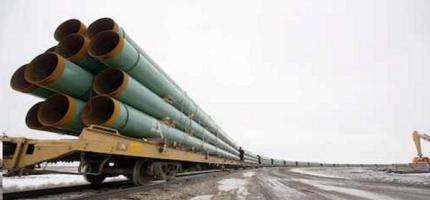
Leading environmental groups declared on Monday that the Obama administration's latest environmental review of the Keystone XL pipeline fundamentally violated the nation's core environmental law, an unmistakable warning that they would sue the State Department if it continued to insist that the pipeline poses no significant environmental risk. As if to bolster their case, the Environmental Protection Agency weighed in as well with its own rebuke. 

The Boston Bombers and the Failure of the American Dream

By Andrew Lam

For children from strife-torn lands, the Old World, though distant and forsaken by the years, sometimes calls out for blood. The war, the humiliation, the subsequent exodus, life in exile, poverty, the continual subjugation of our people back home, our invisible refugee life in America – all are compounded into a kind of unshaped angst. The Tsarnaev brothers once again proved T.S. Elliot prophetic—in the bloody footsteps of the Virginia Tech Shooting, Oklahoma bombing, Columbine Massacre, and Waco – April seems indeed the cruelest month. 

Climate Change, Scarcity of Natural Resources Spell Future Global Unrest

By Michael Klare

It is important to note that absolute scarcity doesn’t have to be on the horizon in any given resource category for this scenario to kick in. A lack of adequate supplies to meet the needs of a growing, ever more urbanized and industrialized global population is enough. Given the wave of extinctions that scientists are recording, some resources -- particular species of fish, animals, and trees, for example -- will become less abundant in the decades to come, and may even disappear altogether.