
Category

News & Features

A Look at Great Wealth Disparities in the U.S.

By Maya Rhodan

Whites had an average wealth of $632,000 in 2010 while Blacks had about $98,000 and Hispanics had $110,000, according to a recent study by the Urban Institute. “Such great wealth disparities help explain why many middle-income Blacks and Hispanics haven’t seen much improvement in their relative economic status and, in fact, are at greater risk of sliding backwards,” the report says.


 

Children of Arranged Marriages Aim to Bridge Cultures

By Monica Luhar

The study also highlighted the issue of immigrant parents who resisted interracial or religious relationships. “It’s not ok for me to marry outside of my religion—I have to marry a Muslim. My parents would prefer someone Arabic because the culture is the same,” a Yemeni female participant said. In conversations and a survey with young San Gabriel Valley residents with immigrant parents, I also heard many youth say that they were up against stiff parental restrictions on dating, uncomfortable conversations, and resistance to marrying outside of their racial or ethnic group.

Ahmed Rachidi, Previously at Guantanamo, Discusses Abominable Conditions

By Sandy Close

During one hunger strike in 2006 the prison commander assigned me to a special block to take care of prisoners he said were coming out of the hospital. But they were actually coming from isolation blocks that were kept ice cold. Each prisoner was shaking, each prisoner had a bruised nose with dried blood and black ringed eyes that were petrified. Everyone complained of gut-wrenching pain and bleeding hemorrhoids. 

Do Demonstrations and Marches Help or Hurt Their Cause?

By Pilar Marrero

As Congress begins to discuss immigration reform, immigrant rights groups, DREAMers and their supporters marched in many U.S. cities, begging the question: Do these marches help achieve the goal of legislation beneficial to immigrants or are they counterproductive? "It is ironic that we are asking this question today, May 1, which commemorates an 1886 march of the emerging labor movement in Chicago demanding an eight-hour work day. That march was attacked by police, its leaders were eventually executed, and it was quashed immediately. 

Crashing the All-White Party in Silicon Valley

By Semany Gashaw

In a thriving Bay Area technology sector where black and brown faces are the exception and not the norm, Chris Cruz, a Filipino American, and Isaac Reed, an African American, are crashing the party. A study conducted in 2011 by three California-based groups looked at workforce diversity at a dozen companies in Silicon Valley, including industry giants Intel, Cisco and Ebay, and found an industry where African Americans and Latinos are grossly underrepresented when compared to their percentages of the state population.

Playing Politics, Governors Jindal, Perry Ditch State Citizens on Healthcare

By Marc Morial

Last week, 400,000 poor and underserved Louisianans, many them people of color, were shut out of potentially life-saving health insurance under the Affordable Care Act (ACA). A Louisiana House health committee voted down a measure that would have forced Governor Bobby Jindal to opt into the Medicaid expansion provision of ACA that is being subsidized by the federal government to cover vulnerable communities.

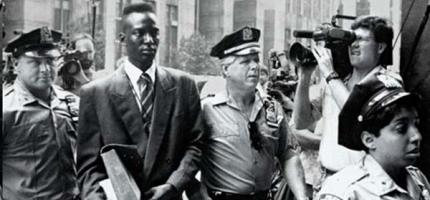
The Central Park Five’s Korey Wise Discusses the Wrongful Conviction

By Mea Ashley

In 1989, Wise and four other young black and Latino teenagers were convicted of raping and beating a white investment banker in Central Park.  The media called her the Central Park Jogger and the accused the Central Park Five. No evidence linked them to the crime except for their confessions, which came after relentless hours of police interrogation. They recanted shortly afterwards, but those statements were still enough to send them all to jail. .Last year, a decade after an inmate named Matias Reyes confessed to the crime, resulting in all five of the boys’ exoneration, Wise, who went free after 13 years, is now suing the city for wrongful imprisonment.

The Consequences of Failing to Obtain Health Insurance in 2014

By Viji Sundaram

To buy or pay the penalty? That is the question that will confront many U.S. residents in the coming months, when open enrollment season begins for health insurance coverage, under the terms of the Affordable Care Act (ACA), also known as Obamacare. ACA will be fully implemented on January 1, 2014, when most legal U.S. residents will be required to have “minimum essential health coverage” or make a “shared responsibility payment,” as the Congressional Budget Office puts it in regulations it rolled out last fall.