Category

Music

Record Store Day Celebrates the Return of Vinyl Junkies

By Benjamin Wright

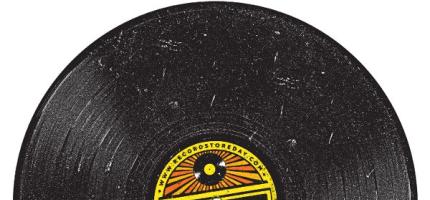
While many indie record stores have disappeared in recent years, notably with the closing of Tower Records’ in 2006 -- just like indie book chains and video stores -- there has been an ever-growing demand for the charming antiquity, the arguably superior sound quality (even with the crackles and pops that annoy proponents of digital sound), and the artistic merit of vinyl records. 

Facing the Music: Does Success Equal 'Selling Out'?

By John McGovern

The rise of the Internet has pushed artists committed to operating apart from "the system" further into the fringes. Any artist who insists on remaining “indie” must forget that the Internet exists, and work through tight mediums. As Rob Horning of n+1 Magazine wrote in June 2011, “The total-corporate state may have arrived without our really having noticed it.” Branding becomes much easier. Thus authenticity, which the independent music scene focuses a significant amount of energy on, must find new ways to be expressed.

The Return of the Electronic Dance Music Craze

By Gabriella Tutino

Avicii. Swedish House Mafia. Tiesto. These big-time names are on the tips of everyone’s tongues, as each DJ and the music they represent is becoming more prominent and more popular in today’s mainstream music. Example? Both Deadmau5 and producer-DJ David Guetta performed at this year’s Grammy Awards, and dubstep artist Skrillex won three out of the five Grammy nominations he was up for – Best Dance Album, Best Dance Recording, and Best Remix.

Hip-Hop’s Evolution: Forsaking Political and Social Awareness for Material Gain

By Natalie Meade

The  hip-hop visionaries  who passed away during the 1990s were an inspiration for emcees today, but why does the mainstream music of today largely disregard the ongoing issues? If one can look past the explicit nature of the music during the ‘90s, it is evident that it was politically charged. The overt lyrics were meant to draw attention to the conditions that most inner-city Blacks could not escape, but it seems as though most artists today are afraid to sacrifice a dollar for the sake of kinship.

Cabinet and the Art of Bluegrass

By Nadine Friedman

It "looks like it would break if you breathed on it the wrong way, like a server carrying champagne glasses.  But somehow, by the end of an evening," says Cabinet's Todd Kopec of his fiddle, "I'm gripping it like hammer, or a sword."  During one of Cabinet's winding instrumental jams, the delicate instrument does seem explosive in his hands. He's a member of a six-man band blending convivial bluegrass tradition with an intelligent, synced appreciation for all music. Not really what one would expect from Scranton.

“Old Ideas": A New Album by Leonard Cohen

By Benjamin Wright

Old Ideas is an apt title for Leonard Cohen’s first new studio album in eight years, insomuch as the album’s themes are familiar ones that weave through Cohen’s collections of song and poetry - mortality, Judeo-Christian morality, faith, and love - leaping between the darkly comedic and the tragic. His superb song-writing still underscores his significance as a poet, revisiting old themes and sounds in new ways on his 12th studio album, released by Columbia Records on January 31.

Can You See the Real Me? Quadrophenia Revisited

By Bailey Pennick

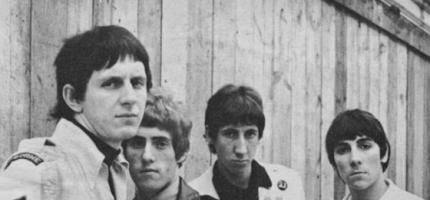
The Who recently released an expanded deluxe CD of Quadraphenia. Pete Townshend’s brainchild allows the listener to relate to the  music on a deeply personal level. The Who’s lesser-known rock opera (always overshadowed by the one about that deaf, dumb and blind kid) follows the struggles of Jimmy, a London teenager who is consumed by the problems that every awkward adolescent faces.

Kennith Kimery: All That Jazz

By Kyle Kelly-Yahner

Thirty years ago, you could find Kennith Kimery in German rock clubs, playing anything from the Beatles to Journey. Today you might find him in Egypt, in front of the Sphinx, with the Smithsonian Jazz Masterworks Orchestra, drumming along to music from Duke Ellington to Benny Goodman.  Or he might be in his office at the National Museum of History scheduling interviews for the Smithsonian’s Jazz Oral History Program, or conducting interviews with legends such as Toots Thielemans or David Brubeck.