
Category

Books & Fiction

Rediscovering the Joy of Quiet: Thank You, Pico Iyer

By Sandip Roy

When a friend forwarded me Pico Iyer’s recent New York Times essay, “The Joy of Quiet,” I was squashed in the back of a Maruti shuttle van on the Eastern Metropolitan Bypass of Kolkata....The honking din of traffic around me was deafening. The construction happening on the bypass added its grating groan to the general bedlam. The Maruti rattled and creaked, the FM radio non-stop hits swelling and garbling with each bump on the road. Every single person in the shuttle was shouting into their cell phone. I wanted them all to stop, take a deep breath and read what Iyer had to say.

Et Tu, Tintin?

By Sandip Roy

From New America Media and Firstpost.com: Charles de Gaulle famously said, “My only international rival is Tintin.” Now Hergé’s Tintin  has his own rival — [Steven] Spielberg’s Tintin. The (battle)lines are drawn. What should be an homage from one master storyteller to another will instead become a battle of technique — Hergé’s ligne claire vs Spielberg’s CGI. The complexity of the simple will become simply complex and the trepidation is that somewhere in that dimensional leap we may find the secret of the unicorn but lose forever the secret joy of Tintin.


Julian Barnes and the Minefields of Memory

By Lee Polevoi

In The Sense of an Ending, winner of the 2011 Man Booker Prize, Julian Barnes has achieved an oddly remarkable thing: He’s written a long novel in the form of a short one. It spans the lifetime of Tony Webster, a late-middle-aged Englishman of no special distinction who receives a mysterious bequest of £500 and is prompted for the first time to reflect on how his event-filled adolescence has influenced the outcome of his adult life.

Don DeLillo Stories Offer Terror and Dread in Captivating Prose

By Lee Polevoi

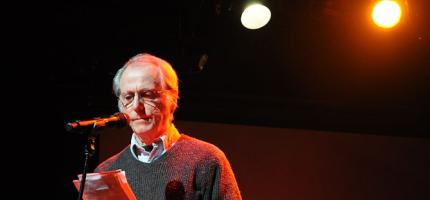
Reading the stories in The Angel Esmeralda reminds us how varied, adept, intelligent and ruthlessly honest this great writer has been from the beginning.  Like his novels, each of these stories trades in dread and terror, and our failure to connect in the fractured and chaotic past half-century.

James Wolcott Lucks Out in the Big Apple

By Lee Polevoi

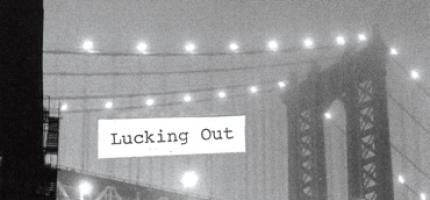
It doesn't hurt that James Wolcott can write up a storm.  He proves this once again with a gritty and compulsively readable memoir, Lucking Out: My Life Getting Down and Semi-Dirty in Seventies New York.  Not quite a memoir in the conventional sense, rather Wolcott has written five long essays that seek to encapsulate the reckless, head-long world of movies, Punk music, porn and the New York City Ballet during a time when the glittering metropolis was both grimy and resplendent, when the likes of Norman Mailer, Blondie and Balanchine somehow co-existed in an urban fever dream of creativity not seen since.

New Fiction: Death Threat

By Lee Polevoi

The Bentley was parked and idling at the curb.  As always, my driver Emil Vaka stood by the open rear door,  his own uniform of ancient Habsburg design garlanded with regal epaulets.  I already pictured myself settling in the backseat as we sped downtown; but as I tugged my camel-hair coat against the morning chill, a woman crossed my path, walking a black-and-tan spaniel on a jewel-encrusted leash.  She was tall, dark-haired, no older than forty, wearing a fur stole and the  air of Old World wealth.  As we exchanged a cordial smile, new purpose suddenly entered my life. 

Jackson Brodie Strikes Again

By Elisabeth Blais

Started Early, Took My Dog is the fourth novel in Atkinson’s Jackson Brodie series. Brodie has appeared in three previous novels by Atkinson, but he’s merely one consistent player among a changing ensemble cast in each book. Atkinson’s books don’t really qualify as mysteries. Yes, Brodie is a policeman-turned-private detective, but the projects he works on are not your typical ‘CSI’ scenarios. He is not confronted with murder scenes, where he must rely on his superior investigative skills to uncover clues, then pull out his Sherlock Holmes-like brain power for a big reveal. More often than not, Brodie chances onto a solution by accident or simply by being in the right place at the right time. 

The Outlaw Album: Stories by Daniel Woodrell

By Lee Polevoi

Filmgoers know of Daniel Woodrell from Winter’s Bone, his novel made into last year’s Academy Award-nominated film.  A few of us hardier souls know his work from long before, both the acclaimed  “country noir” novels set in and around the Ozarks and Woe to Live on, his splendid gothic Western published in 1987 (and filmed by director Ang Lee as Ride with the Devil).  Woodrell’s novel was one of several from the ‘70s and’80s, including Ron Hansen’s Desperadoes, and stories from Barry Hannah’s legendary Airships, that breathed new life into westerns and paved the way for modern-day works like Cold Mountain by Charles Frazier and Patrick DeWitt’s Booker Prize short-listed novel, The Sisters Brothers. In fact, a section from Woe to Live On is featured in this collection, under the same title, and it’s one of this short collection’s true stand-outs.