Category

Books & Fiction

The Best Books of 2012 (and Honorable Mentions)

By Lee Polevoi

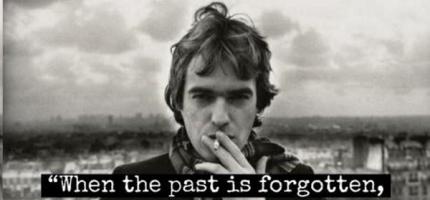
Each new book by Martin Amis seems to trigger a media frenzy involving sensational details from his past. By now (Lionel Asbo is his 13th novel), this frenzy serves not to enlighten but to distract from the work itself. In that respect, Amis remains one of the most consistently interesting and—on a purely sentence-by-sentence level—one of the best writers around. Language is his true dominion, a manic, bubbling and light-footed style that depends as much on the reader’s ability to keep up as on its own hard-earned effects. 
Neil Landau on the Art of Screenwriting

By Christopher Karr

This is the kind of practical, well-articulated knowledge you can find in The Screenwriter's Roadmap. It's organized into 21 chapters that each focus on an essential aspect of the writing and re-writing process. Each chapter also includes a corresponding interview with a screenwriter currently in the business. The guidebook is clear, well-organized, and sometimes painfully academic and overly analytical. This is a common attribute of all screenwriting guidebooks, but Landau's prose is, at times, more readable than Field and McKee. 

How the Publishing World Acclimated to the Digital Revolution (Part 1)

By Gerry LaFemina

Like the record industry before it, the publishing industry is changing dramatically.  Of the Big Seven publishers (Random House, HarperCollins, MacMillan, Penguin, Simon & Schuster, Hachette Book Group (Little, Brown & Co, et al), and Scholastic), six of them–all but Scholastic– have proven to be too big to change their business strategy in a rapidly changing marketplace. The culprit was a combination of the predatory sales practices of online retailers (particularly Amazon.com) and changes in the media (MP3s in the case of the music industry; ebooks in the case of the book industry).

New Book Explores the Rich History of Mayan Culture

By Snapper S. Ploen

The advent of 2012 has brought with it much discussion of the ancient Mayan people of Central America and, predominantly, their “apocalyptic” calendar. However, this sudden pop culture interest would better serve as a place to launch a far more in-depth look at a civilization that was flourishing when Europe was enduring its Dark Ages. Royal Cities of the Ancient Maya, a recently published work by literary co-pilots Michael D. Coe (text) and Barry Brukoff (photography) and currently available from Vendome Press (NY), presents readers with this most fortunate opportunity. 

A Toast to Cocktails in Literature

By Benjamin Wright

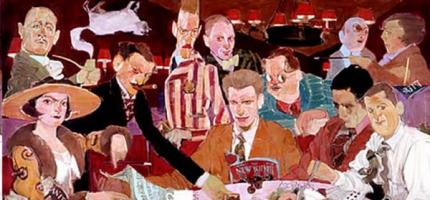
Throughout the works of Russian writers, like Tolstoy and Chekhov, the characters drink vodka like there is no tomorrow, and also wine, as in Tolstoy’s War and Peace. Mead, the delicious honey wine first created by the ancients, played a significant role in Beowulf, with Beowulf, the hero, defending the king’s mead hall against the terrifying beast, Grendel. In works like Steinbeck’s classic moral tale, The Pearl, the featured drink of choice is pulque, a beverage made from the maguey plant’s fermented sap. 

New Fiction: Douglas at the Diner

By Sam Chapin

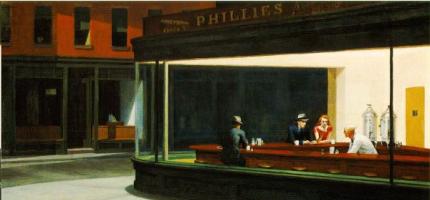
Douglas opened his eyes and was temporarily blinded by the light from his lamp. He squinted as he sat up, replaced his reading glasses with the glasses on the nightstand, and inserted a bookmark into The Disenchanted. He slipped on his slippers and walked to the window, drawing the blinds. The light from the sun overwhelmed the light from the lamp, as he became temporarily blind once again. He squinted out the window, looking for what had woke him. He looked down the three floors to the street and saw, lying on the sidewalk, a dead pigeon. 

Zadie Smith Lays Claim to a Patch of London in ‘NW’

By Lee Polevoi

Throughout NW, Smith demonstrates a deep understanding of the constant ebb and flow of human relationships—between mothers and daughters, between best friends, between a reformed addict determined to stay clean and his flamboyant, drug-using ex-girlfriend.  Even forewarned of an impending tragedy, the reader becomes so absorbed in these characters’ lives that when  calamity does strike, it comes as a breathtaking surprise and with a penetrating sense of loss.

Welcome to the Literary World: Conferences, Retreats, and Hobnobbing With Like Minds

By Gerry LaFemina

Although some writers conferences date back to the 1940s and ‘50s (Bread Loaf being the most prominent, which featured among other literary luminaries, Robert Frost and Louis Untermyer), poet, editor and writers conference organizer Kurt Brown notes that “the rise of writers conferences really took place during the 70s, 80s and 90s when these (mostly summer) programs spread from border to border and coast to coast.” It’s not surprising, as conferences allow writers an opportunity to escape their day-to-day routine in order to be immersed in literary fellowship.